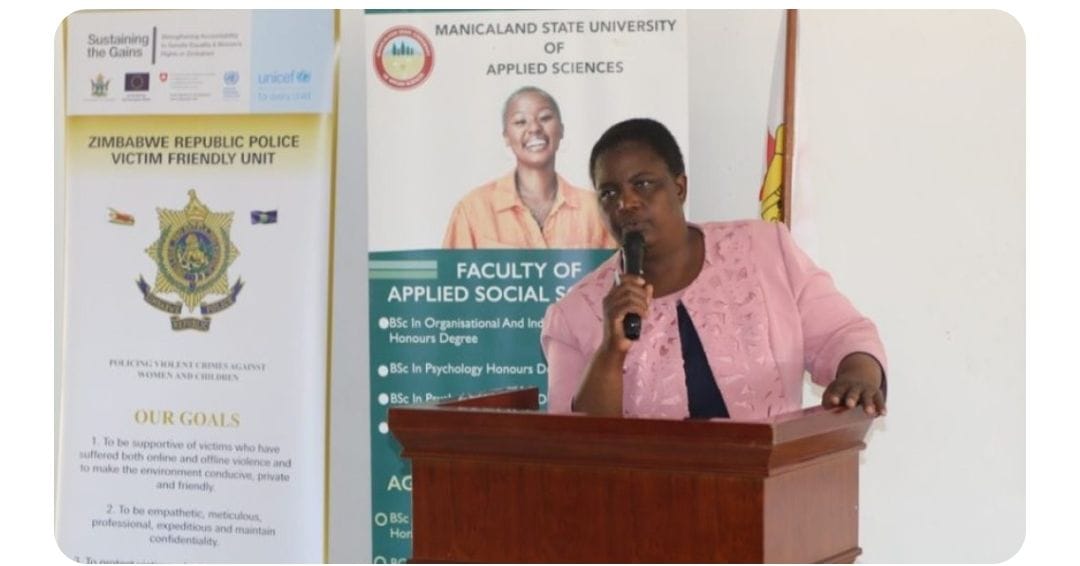
Assistant Commissioner Matilda Singende
By Trymore Tagwirei
Gender-Based Violence (GBV) continues to devastate families in Chivi district, with community leaders and police raising the alarm over a surge in domestic violence cases that have claimed lives, orphaned children, and left many victims suffering in silence.
One of the most tragic incidents occurred in January this year in Tizirai Village under Chief Nemauzhe, where Zangirayi Matiza (46), a father of five minor children, died after being assaulted during a domestic dispute with his wife, Mercy Pfidze.
Tizirai Village Head Edmore Chinenyanga condemned the increasing cases of gender-based violence and child marriages in the area, stating that traditional leaders are intensifying awareness campaigns to combat the scourge.
“We lost Zangirayi because of GBV, and it’s very sad. In response, we are coming together as traditional leaders to raise awareness against GBV. We carry this message to all community meetings that we convene,” said Chinenyanga, who was related to the late Matiza.
He noted that village heads are assisting by enforcing community by-laws whereby anyone found abusing a spouse faces traditional penalties in addition to statutory legal action. He acknowledged that GBV remains highly prevalent in Chivi, citing another case in a neighbouring village where Pedzisai Jera allegedly killed his wife, Chipo Mudhovozi, during a domestic dispute.
Community members who spoke to EnviroPress said Matiza was fatally struck on the head with a log during a fight with his wife. He sustained severe head injuries and later died at Masvingo Provincial Hospital, where he had been admitted for specialist treatment.
Pfidze, a nursing mother, was subsequently arrested and is currently serving a prison sentence while breastfeeding her baby.
While men are also victims, the incident highlights a broader, growing burden of GBV in Chivi, where many cases of violence against women go unreported due to cultural beliefs that discourage victims from reporting abusive spouses to the police. As a result, many continue to endure abuse in silence.
This growing concern comes as the Zimbabwe Republic Police (ZRP) continues nationwide awareness campaigns targeting drug and substance abuse, child marriages, and gender-based violence.
Speaking recently during a GBV and Drug and Substance Awareness meeting, the ZRP Victim Friendly Unit National Coordinator, Assistant Commissioner Matilda Singende, said the outreach programme was designed to equip communities and young people with knowledge on these critical issues.
“We are moving across all provinces conducting these awareness campaigns because women and young people need this information. They are the most affected and are often the primary victims. Drug and substance abuse, gender-based violence, and child marriages are contributing to school dropouts and destroying the future of many children,” she said.
Assistant Commissioner Singende further noted that police teams have so far covered six provinces, including Masvingo, and will continue engaging learners and communities as part of efforts to curb these growing social challenges. She added that the campaign also seeks to encourage communities to play a more active role in safeguarding vulnerable groups.
“While parents must take responsibility for protecting their children and teaching them the right values, communities have a collective duty to ensure that children grow up in environments that support their development and protect them from harmful practices,” she said.
The awareness campaign forms part of the police’s broader strategy to reduce drug and substance abuse, child marriages, and gender-based violence through prevention, education, and active community engagement.
Police statistics show that Masvingo remains one of Zimbabwe’s GBV hotspots, with hundreds of cases recorded each quarter. Authorities continue to urge communities to report all incidents of domestic violence promptly, stressing that early intervention can save lives and help break the cycle of abuse destroying local families.