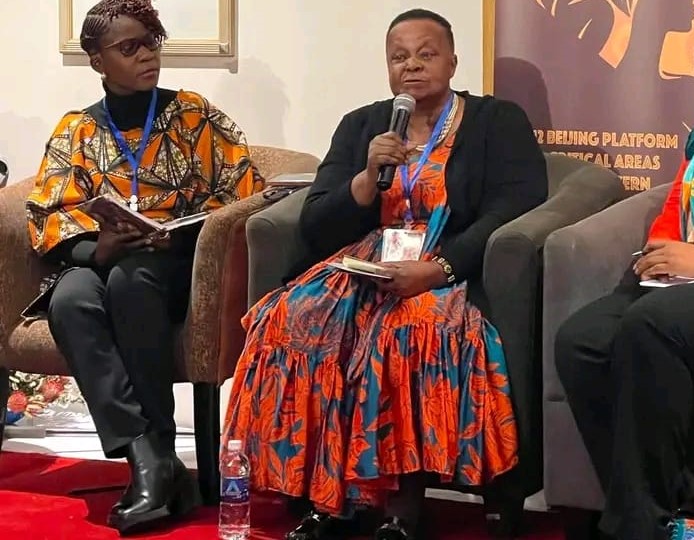
Veteran community organiser Bertha Jambaya of Jekesa Pfungwa Trust speaks during the launch of the State of Women Report, Harare, on July 30, 2026
By Macdonald Mudzaki
Zimbabwe has made significant progress in developing laws and policies that promote gender equality, but implementation continues to lag behind, leaving millions of women and girls vulnerable to violence, economic exclusion and discrimination, according to the 2026 State of Women Report launched this week.
The report, released by the Women Coalition of Zimbabwe (WCoZ) during its Annual Women’s Summit at the Harare International Conference Centre, describes itself as an evidence-based accountability tool designed to assess Zimbabwe’s progress towards the realization of women’s human rights while measuring whether national commitments are producing tangible results.
Held under the theme “Voice. Power. Lead.”, the summit brought together government officials, parliamentarians, development partners, Civil Society Organisations (CSOs), academics and women’s rights advocates to reflect on the country’s progress and identify the barriers depriving equal opportunities.
Launching the report, WCoZ Chairperson Muchanyara Mukamuri said the publication represented the next phase in monitoring gender equality in Zimbabwe.
She said while the inaugural 2025 State of Women Report established a national baseline on the status of women, the 2026 edition moved beyond documenting challenges to measuring progress and exposing gaps in implementation.
“This report measures progress, identifies implementation gaps and challenges all of us to move from commitments on paper to tangible improvements in the lives of women and girls,” Mukamuri said.
The report acknowledges important policy developments over the past year, including the adoption of the National Gender Policy 2025, Zimbabwe’s transition to National Development Strategy 2 (NDS2) and the country’s continued commitments under regional and international human rights instruments protecting women’s rights.
However, the coalition says the evidence revealed a persistent gap between policy ambition and reality.
Despite an increasingly progressive legal framework, women and girls continue to experience structural inequalities characterised by Gender Based Violence (GBV), economic exclusion, limited access to justice, shrinking civic space, climate vulnerability, digital inequality, inadequate financing for gender equality initiatives and discrimination affecting women in all their diversity.
The report argues that constitutional guarantees and policy commitments alone are insufficient without political will, adequate funding and effective institutions capable of delivering measurable results.
“The time for implementation is now,” Mukamuri said.
WCoZ urged the government to fully implement the National Gender Policy, integrate enforceable gender equality targets throughout NDS2, expand gender-responsive budgeting across ministries and local authorities and increase domestic investment in programmes that empower women and strengthen social protection systems.
Parliament was challenged to intensify oversight of government ministries and ensure that commitments contained in national laws, budgets and policies are translated into measurable outcomes.
The judiciary and independent constitutional commissions were urged to improve access to justice, particularly for GBV survivors, while ensuring justice systems remained timely, accessible and survivor-centred.
Recognising the increasing burden climate change places on women, the report also called on local authorities to strengthen gender responsive planning by improving access to water, sanitation, healthcare, markets, climate resilient services and social protection.
Development partners were urged to provide predictable, flexible and long-term funding for local women’s rights organisations, while the private sector was encouraged to invest more in women’s economic empowerment through inclusive employment, procurement opportunities, equal pay, leadership development and innovations that reduce the digital gender gap.
The coalition also challenged the media to report consistently and responsibly on women’s rights issues while holding public institutions accountable for delivering on gender equality commitments.
Communities, traditional leaders and faith leaders were called upon to reject harmful social norms and practices that perpetuate discrimination and violence against women and girls while promoting shared responsibility and equal participation in leadership.
The report’s launch sparked broader discussions on the future of Zimbabwe’s women’s movement.
Renowned lawyer and academic Julie Stewart said Zimbabwe’s greatest challenge was no longer the absence of laws protecting women but weak implementation of existing legislation.
“We don’t have a lack of laws. We have a lack of implementation,” Stewart said.
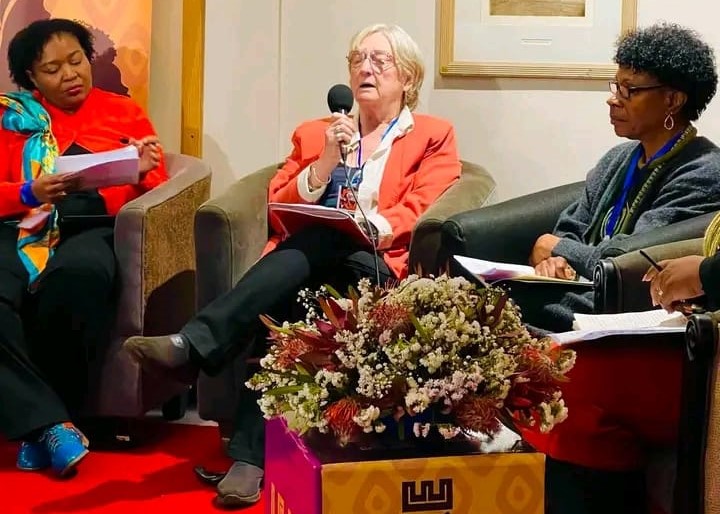
She argued that the country is already adequately legislated and encouraged women to organise around existing national frameworks, including the National Development Strategies, while taking up leadership positions from community-Based Organisations (CBOs) to national institutions.
Veteran women’s rights activist Bertha Jambaya warned that growing competition for donor funding has weakened solidarity within the women’s movement.
She urged organisations to move beyond individual interests and rebuild a united movement capable of influencing national policy and demanding accountability from duty bearers.
Adding another perspective, Teach For Zimbabwe Chief Executive Officer (CEO) Dr Mirriam Siwela said discussions about women’s leadership cannot ignore economic realities.
She argued that rural women, who make up the majority of Zimbabwe’s female population, continued to be excluded from national conversations because they lack economic power.
“We cannot meaningfully talk about participation when the majority of women remain economically excluded,” she said.