By Trymore Tagwirei
A community in Bikita District, Ward 19B, under Chief Mazungunye, has made significant progress in protecting and restoring a local wetland through the Chaita Village Wetland Rehabilitation Initiative, supported by Christian Care.
Covering approximately eight hectares, the wetland is one of the area’s most important natural water sources. It remains waterlogged for much of the year and plays a critical role in sustaining biodiversity, filtering water naturally, recharging local streams, and supporting the livelihoods of surrounding communities.
To safeguard the fragile ecosystem, community members have enclosed the wetland with an eight-strand barbed-wire fence to prevent illegal cultivation, livestock grazing, and other destructive activities. A fireguard has also been constructed to minimise the risk of veld fires, allowing indigenous vegetation to regenerate naturally.
The rehabilitation programme, which began in 2025 and is set to run through 2027, has drawn widespread community participation, with residents volunteering their labour to restore the land.
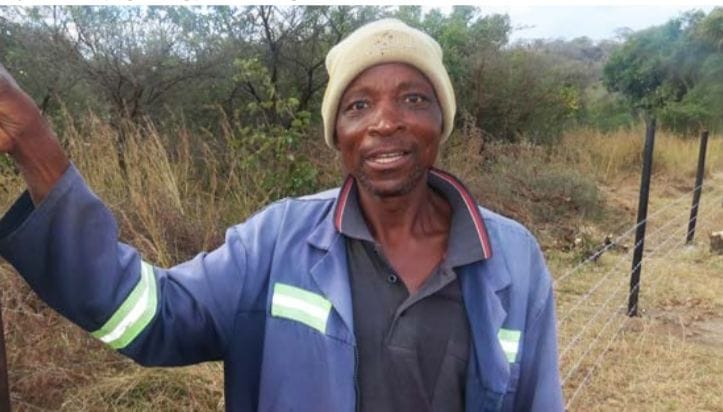
Project Chairperson Amato Chaita (pictured) said the initiative has received overwhelming local support, reflecting a shared commitment to ecological conservation.
“More than 200 residents drawn from 20 villages in Ward 19B are actively involved in this rehabilitation project. The community has volunteered its labour in recognition of the importance of ecological conservation for both present and future generations,” said Chaita.
He added that with the initial protection phase complete, the community is looking toward sustainable livelihood projects to boost household incomes while building resilience against climate change.
“The rehabilitation phase is complete. We now intend to venture into climate-smart agriculture and horticulture, as well as harvest water from the wetland for domestic use and livestock,” Chaita noted, emphasizing that safeguarding the wetland secures both water supplies and economic opportunities.
The initiative aligns with national and international environmental goals. Zimbabwe is a contracting party to the Ramsar Convention on Wetlands—the 1971 international treaty promoting wetland conservation and wise use. The Bikita project directly supports Zimbabwe’s commitments under the treaty.
Masvingo Provincial Environmental Management Agency (EMA) Manager Milton Muusha commended the community, describing wetlands as vital ecosystems that must be shielded from uncontrolled grazing, cultivation, and deforestation.
“Wetlands are unique ecosystems that play a critical role in maintaining ecological balance. They act like natural sponges by absorbing and storing water, filtering pollutants, reducing flood impacts, and recharging rivers and underground water sources,” Muusha said.
“When communities protect wetlands, they are investing in their own future. Healthy wetlands improve water availability, restore vegetation, support wildlife, and create opportunities for sustainable livelihoods through climate-smart agriculture.”
Muusha added that preserving wetlands enhances biodiversity and builds long-term community resilience in the face of climate change.