
Tony Phiri
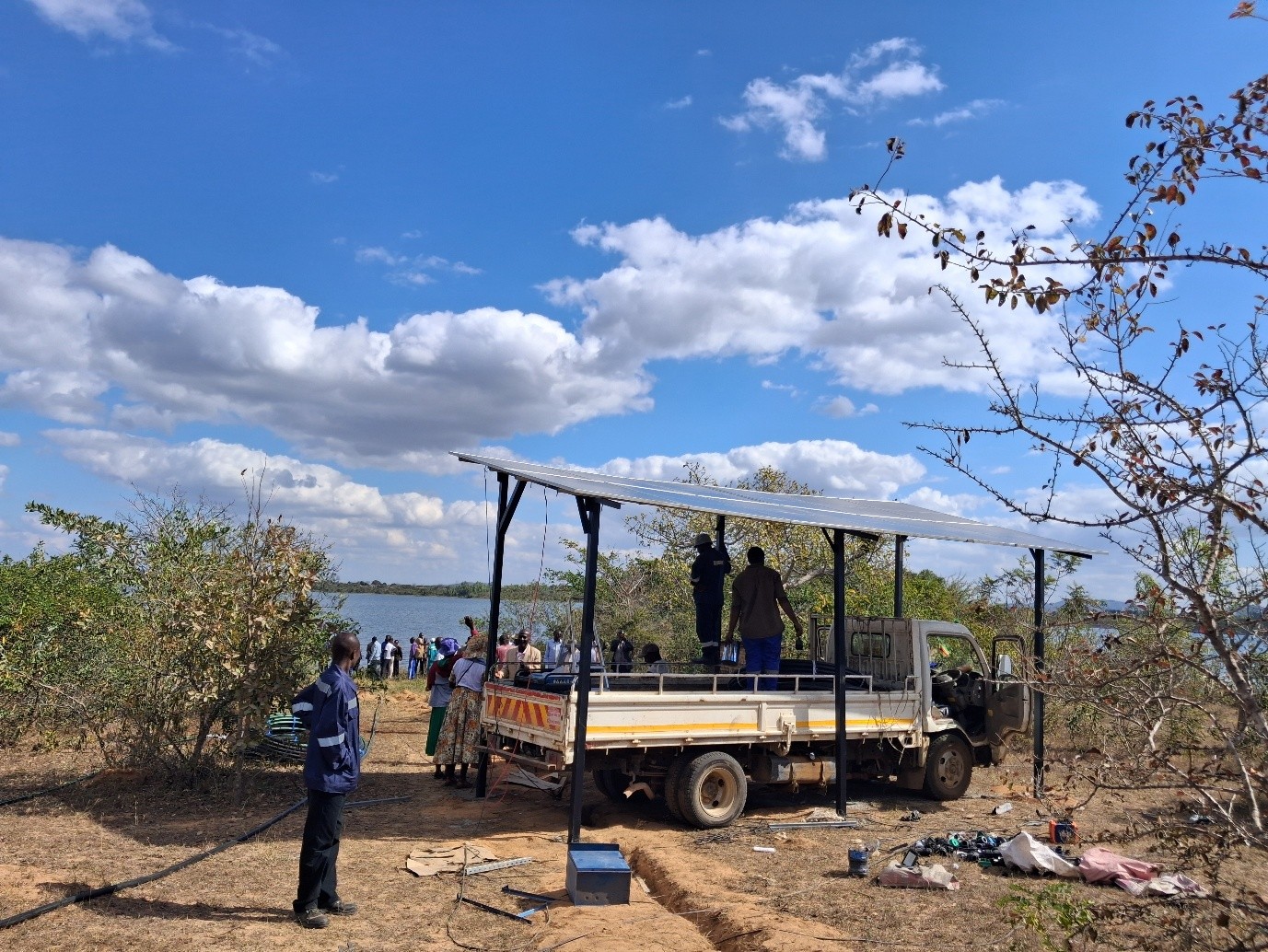
Mazungunye Government High School on Monday (July 13) commissioned a solar-powered water system funded by the Embassy of the Kingdom of the Netherlands in Zimbabwe and implemented by the Schools and Colleges Permaculture Programme (SCOPE) Zimbabwe.
The infrastructure, which includes a solar submersible pump, solar panels, and water storage tanks, is designed to support school nutrition gardens, agricultural production, and the Ministry of Primary and Secondary Education’s school feeding programme.
As part of the project, SCOPE Zimbabwe donated two 5 000-liter water storage tanks, 12 440-watt solar panels providing 5.28 kilowatts of solar power, a 5.5 horsepower solar submersible pump system, and associated irrigation infrastructure.
Operating at an estimated flow rate of 120 liters per minute, the system is capable of pumping approximately 57,600 liters of water during eight daily sunshine hours.
According to technical specifications, this capacity is sufficient to irrigate 1 to 1.5 hectares of crops per day under standard drip irrigation systems.
The water supply is expected to benefit Mazungunye Government High School, Mazungunye Primary School, and adjacent community production units by providing water for year-round agricultural activities and practical learning under Zimbabwe’s Heritage-Based Curriculum.
Better Masunda, representing the Bikita District Schools Inspector’s office, urged the local community to secure and maintain the infrastructure.
“We want to see the upliftment of the business unit and to see learners eating at least one hot meal a day from Monday to Friday, as required by the Ministry of Primary and Secondary Education.
“This investment belongs to the community. Let us protect it, maintain it and use it to improve education outcomes, nutrition and livelihoods for our children,” said Masunda.
Mazungunye Government High School Headmaster, Jukwa, said the lack of reliable water had previously constrained the school’s agricultural and vocational training programs.
“This solar water system gives us the opportunity to establish productive gardens throughout the year, improve our school feeding programme and provide learners with practical skills,” Jukwa said.
School Development Committee (SDC) chairperson, Manyurure, noted that the infrastructure would also serve local households, strengthening the utility of the school as a community asset.
The commissioning was held alongside a school agricultural field day themed ‘Honouring Our Indigenous Seeds’ The initiative aligns with the environmental and agricultural objectives outlined in Zimbabwe’s National Development Strategy 1 and 2 (NDS1 and NDS2), which promote climate-smart agriculture and local food security.