By Edith Mugabe
The global rush for critical minerals risks repeating old patterns of exploitation if the green transition ignores the rights of local women. This was the urgent message at a two-day summit hosted by the Center for Natural Resource Governance (CNRG) in Harare recently.
The event ran under the theme, “Her Land, Her Minerals, Her Future: Centering Women’s Rights and Leadership in Zimbabwe’s Minerals Governance.” The gathering brought together women from mineral-rich areas, including Bikita, Hwange, Buhera, and Goromonzi districts.
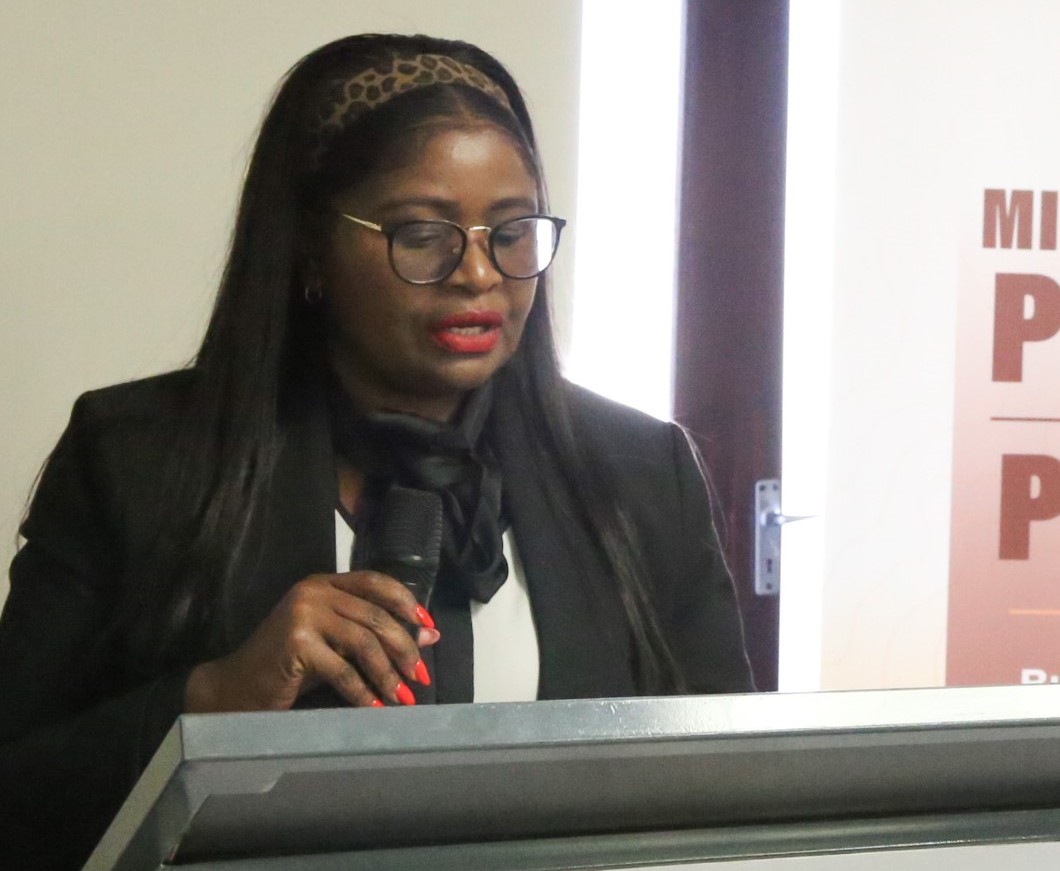
In her presentation, CNRG Board Chairperson Isheanesu Chirisa (pictured) warned that while women bear the heaviest burdens of extraction, they remain excluded from decision-making.
“Women continue to carry the heaviest burdens of mineral extractions in their communities, they experience displacement from their land and homes, they walk longer distances in search if clean water, they carry the responsibility of feeding families when agricultural land is polluted or lost, they are exposed to high risks of gender based violence, sexual exploitation, and insecurity where mining activities disrupt the social fabric of communities, this is very worrying because women are present at the point of impact, but absent at the point of decision-making,” said Chirisa.
She remarked that the summit was a call to make sure that the green transition does not become another form of injustice for African women.
Participants shared testimonies of the localized costs of mining, with Margaret Tauya from Bikita highlighting the health risks driven by pollution from Bikita Minerals, a lithium producing company.
“Women from mining comminities face unique challenges including lack of water, sexual exploitation, rape, and Gender Based Violence (GBV). Women carry the heaviest burdens because they are the centre piece of households,” Tauya said.
A representative from Hwange reported spikes in GBV, stating that the influx of people from elsewhere in search of opportunities often comes with serious problems for local women.
“Our daughters are being abused and raped by these mine workers and owners and nothing is being done about it, these mine owners employ people who are not from our area hence they will not value the essence of dignity and community,” she said.
Lahliwe Musikavanhu from Buhera bemoaned the lack of secure tenure for people displaced by new mining operations. Musikavanhu was relocated from her rural home to Murambinda Growth Point to pave way for the development of Sabi Star Mine, another lithium producing company.
“We do not have title deeds to the houses they build for us, we do not know what the future holds for us and our families, we live in fear that when the mine closes they are likely to take our houses and we will not be able to do anything about it because we do not have legal documents supporting that the houses are ours,” she said.
To counter these systemic violations, participants signed a Women’s Declaration whose mandate aligns with constitutional obligations and the African Green Mineral Strategy, which seeks to ensure a just and inclusive green transition.