By Trymore Tagwirei
Villagers displaced from Nuanetsi Ranch and resettled in Masangula, Ward 13 of Mwenezi East, are grappling with a worsening water crisis that has severely disrupted family life and threatened local livestock.
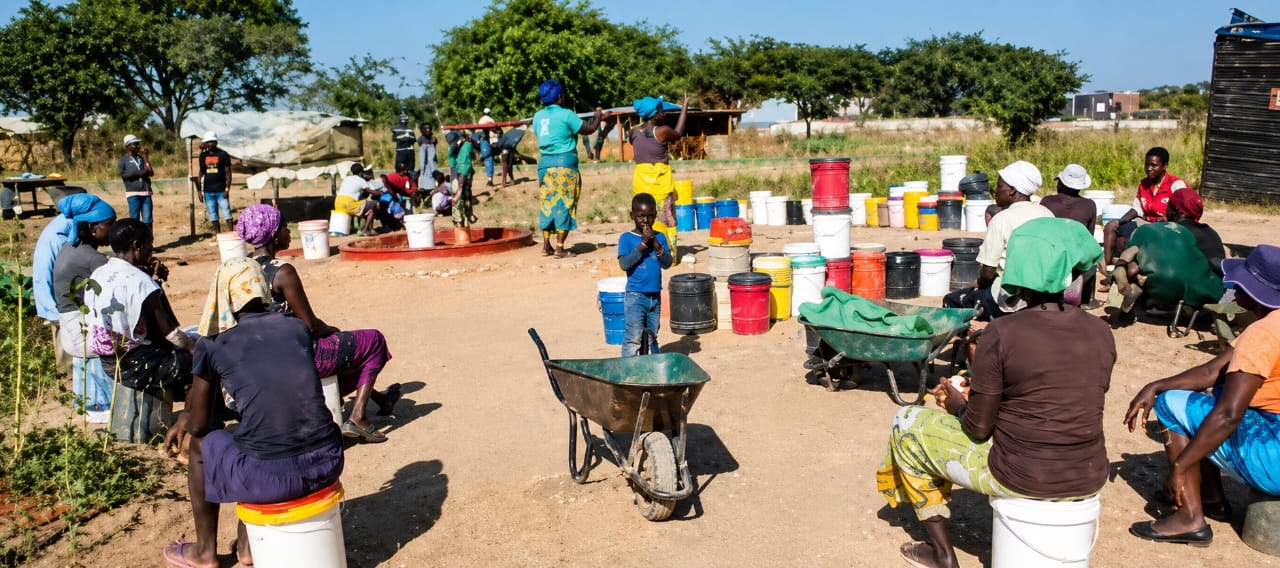
A few boreholes that still yield water are now stretched beyond capacity, serving far more people than they did a year ago when conditions were normal. The affected villages—including Maluleke, Njavani, Matutu, and Chimuti—all depend on a single functional borehole for both domestic and agricultural needs.
For Sarudzai Chikosi and other local women, the shortage has turned the daily responsibility of household care into a severe struggle.
“The few functional boreholes cater to much larger populations than before, resulting in frequent breakdowns. Because we now have to walk longer distances to fetch water, we must strictly ration our usage. Even our daily bathing routines have changed,” said Chikosi.
She added that while the borehole in her village previously supplied water mainly for domestic use, it must now sustain livestock as well, as nearby streams and natural water sources have completely dried up.
Community members emphasize that the burden falls heaviest on women, who are traditionally responsible for fetching water, cooking, washing, and caring for children and elderly family members.
Cuthbert Zhou, a local resident, noted that many families in Masangula were only recently resettled after being displaced from other areas.
“My family and I were relocated here in October last year after being evicted from Nuanetsi Ranch to pave the way for investors, without any compensation. This area is much drier and harder to live in. We will have to move with our livestock and camp near the Runde River if our animals are to survive this long dry season,” Zhou said.