Stanslous Ruvengo
Small-scale vegetable production led by women remains a primary safety net for rural households in Chivi District facing climate change, sustaining healthier nutrition, school fee payments, and family dignity.
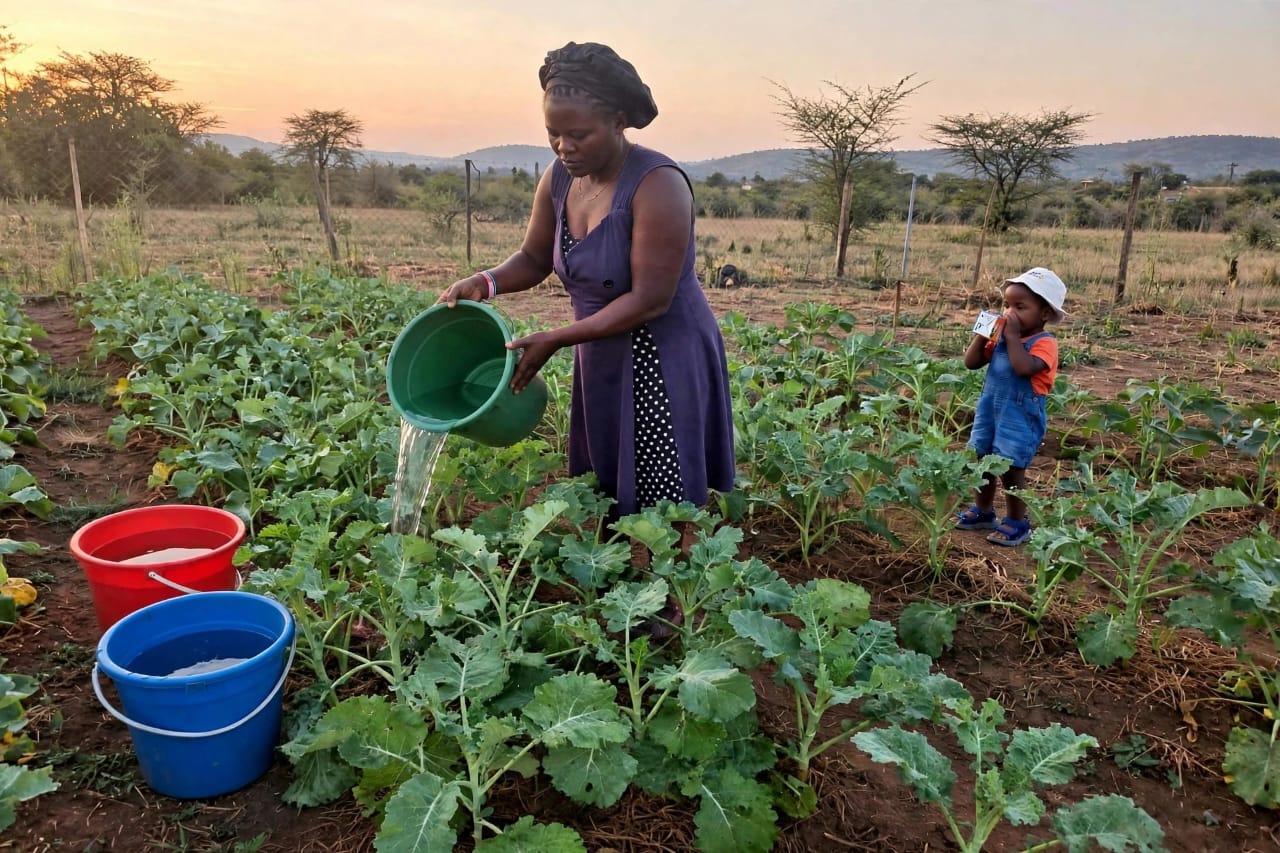
EnviroPress visited Chipatiso Village in Ward 20 and talked to women gardening near Sese Business Centre. The women use buckets to ferry water from a small community weir built some years ago.
The women said they turned to gardening because they had no better alternatives for making a decent living.
“We have adapted to vegetable production because Chivi is dry, and we often get nothing from our hard work in the fields. With the little water we get from the dam, we are now able to feed our families,” said Anna Mhere (pictured) of Chipatiso Village.
In Ward 16, the Nyimai Cooperative Gardening Project supports over a dozen families by growing basic vegetables used in local kitchens.
“I faced severe financial hardship before I turned to gardening, and I am glad today because my life is easier,” said Tsitsi Mavhika, a cooperative member.
A single mother who sells her produce at Chivi Turnoff Business Centre, Mavhika said she can now pay school fees and buy books and clothes for her children.
“My main customers are other women, some of whom travel all the way from Beitbridge to buy vegetables in bulk,” she said.
With 82 members, 70 of whom are women, the Nyimai project started in 2000 and is credited with significantly reducing extreme poverty in the community.