EnviroPress Reporter
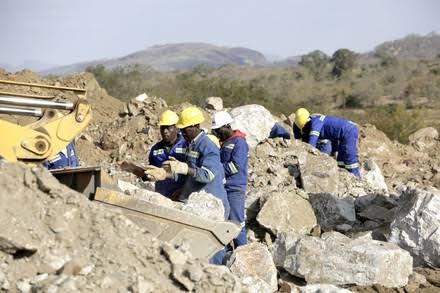
At Sandawana Mine in Mberengwa, Christmas is shaped as much by the mine’s production schedule as it is by the calendar.
The lithium operation, once synonymous with Zimbabwe’s emerald industry, is again becoming a major employer in the district. Sandawana is projected to produce 162,000 tonnes of lithium concentrate in the 2025/26 financial year, more than double its previous year’s output, as expansion gathers pace.
Behind those figures are workers whose festive plans depend on wages, rosters and how much time their shifts leave for home.
The mining industry’s latest wage agreement offers some relief. In July, the National Employment Council for the Mining Industry concluded a 2026 salary agreement covering Grades 1 to 13, negotiated by the Associated Mine Workers Union of Zimbabwe, the Zimbabwe Diamond and Allied Minerals Workers Union and the Chamber of Mines. The new structure applies from January to December 2026.
But a pay rise does not automatically translate into an easier family life.
A 2025 socio-economic study of Zimbabwe’s lithium mines found that accommodation is a significant concern at Sandawana. The research reported that the mine continues to use old housing dating from the 1970s, with some workers accommodated in structures described as poorly ventilated, while others reportedly use tents. It also found that existing mine accommodation generally does not cater for workers’ families.
That matters most during holidays such as Christmas, when the expectation is that families should be together.
Sandawana’s employment footprint has nevertheless transformed the local economy. When lithium operations restarted in 2023, the mine and its contractors employed about 1,500 people, with local residents reported to account for 80 percent of opportunities. By 2024, the mine was reported to have added more than 1,000 local jobs within three months, bringing income into households that had struggled with unemployment.
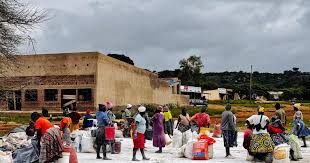
For surrounding communities, however, mining employment exists alongside longstanding shortages in infrastructure. Local leaders have repeatedly called for better roads, electricity, healthcare and decent accommodation for mine employees.
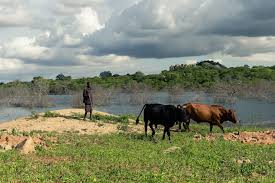
Water has also become a practical household issue. Sandawana has installed solar-powered boreholes in surrounding communities and announced plans for more, after residents reported walking long distances to collect water.
The mine’s growth is accelerating. In March, the Government said construction of a three-million-tonne-per-year lithium concentrator was expected to begin in June, with completion projected within 18 months.
For Sandawana’s workers, therefore, Christmas is about more than a festive bonus or a pay cheque. It is the question of whether rising mineral production can translate into better wages, manageable shifts, decent housing and enough time with the people whose lives ultimately depend on the mine.