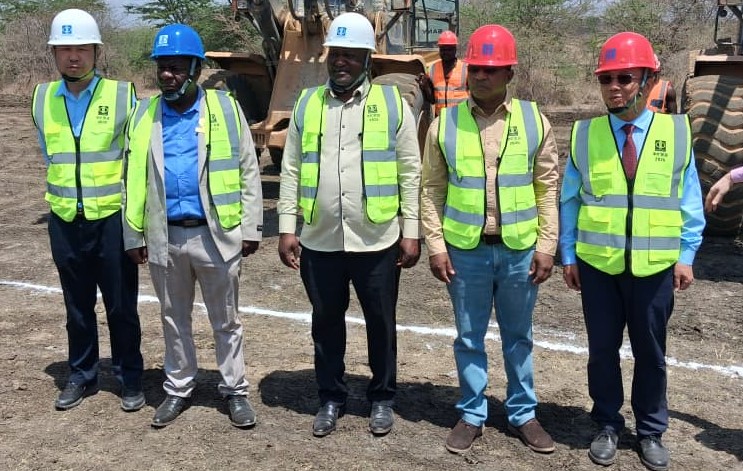
Kambamura, 3rd from left, has warned against complacency by lithium miners ahead of the ban on exports of unprocessed lithium
Trymore Tagwirei
Government is not going back on its deadline to ban the export of lithium concentrates starting from January 2027, the Minister of Mines and Mining Development, Polite Kambamura has warned.
Speaking during the recent ground-breaking ceremony for a tantalum and niobium processing plant at Bikita Minerals, Kambamura advised the lithium producer to take the deadline seriously.
“Remember we came up with a deadline, and as government, we are not going back on that deadline. As you work, do it with the deadlines set by government as your target,” said Kambamura.
Read More: Zimbabwe to ban export of lithium concentrates in 2027
Breaking!Zimbabwe suspends lithium concentrate exports to tighten controls, accelerate beneficiation
Yahua begins construction of lithium sulphate plant in Zimbabwe amid push for local value addition
Kambamura urged the lithium producer to swiftly facilitate skills transfer to ensure that top management roles are predominantly occupied by local in two years’ time.
“You need to comply with the issue of empowerment of our people by employing locals. When we announced the policy in February this year, we said the top echelons or the top management should have Zimbabweans. I think it’s work in progress. I have noticed that at each level, there are locals that are understudying to enable the skills transfer,” said Kambamura.
He said government expected top mine management roles to be occupied by Zimbabweans in two years’ time.
“When we come back here I two years’ time, we expect to see plant managers and mine managers to be all locals. We have rich human capital, skilled labour in mining, but what we don’t have is the capital that you bring. Together, we can come up with a sustainable mining industry,” Kambamura said.
On shared benefits with local communities, Kambamura said all mine work should result in the upliftment of surrounding villages.
“The success for the work that you are doing here should benefit the communities in which you are operating. If the works fail to benefit the local communities, then what you are doing is not sustainable, it’s not good enough.
You can watch the full speech here: https://youtu.be/vwz6xym8g9Q?si=Oet84jbA2e16FeoN