EnviroPress Reporter
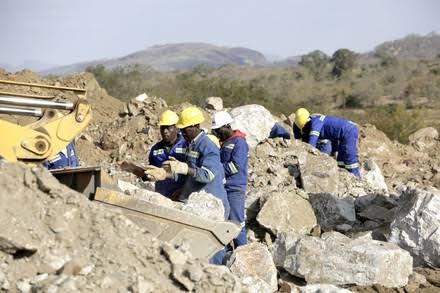
Sandawana Mine’s expanding lithium operations are squeezing grazing land in Mberengwa, forcing livestock owners to compete with a rapidly growing mining footprint for land and water.
The conflict is emerging as the mine prepares for a major expansion after confirming a 39.9-million-tonne lithium resource from Block A alone, with exploration still to cover much of its mining claim.
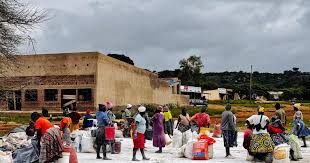
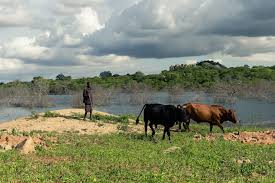
For cattle-owning families around the Mweza Mountain Range, the lithium boom is therefore raising a basic question: how much land will remain for livestock as mining expands?
A 2025 study by the Centre for Natural Resource Governance (CNRG), based on interviews and field observations in Mberengwa, found that villagers had lost access to parts of the Mweza Mountain Range traditionally used for grazing. Some residents told researchers that fenced mining areas had become off-limits to cattle, leaving households with less pasture.
Ward 29 councillor Collen Mhloro told EnviroPress in 2025 that “much of the grazing land has been lost to the mine”, while also alleging that some water sources had become contaminated.
Those are community claims, rather than independently verified measurements, but they echo concerns documented in the CNRG study about water pollution, vegetation clearance, soil disturbance and loss of access to natural resources.
The implications are practical. For a household dependent on cattle, losing grazing land is not simply an environmental inconvenience. It can mean travelling farther for pasture, spending more on supplementary feed or reducing herd sizes — potentially eroding one of the few forms of household wealth available in rural communities.
Yet the mine argues that development need not come at the expense of the community.
Kuvimba Mining House, which previously controlled Sandawana, said it had an environmental impact assessment covering its exploration and that mitigation and rehabilitation measures were being followed. The company has also previously said it intended to work with Agritex on livestock production.
There are signs that the mine is preparing for a much larger footprint. In 2026, the company advertised for a relocation officer to coordinate affected households and livelihood-restoration programmes as part of the mine expansion.
At the same time, Sandawana is being positioned as a major industrial project. Government said construction of a three-million-tonne-per-year lithium concentrator was expected to begin in 2026, while the mine has projected thousands of jobs during the development phase.
That makes the grazing question harder to ignore.
Mining and livestock can coexist — but only if grazing routes, water sources and livelihoods are treated as assets to be planned around, not obstacles to be cleared. Zimbabwe’s environmental framework already requires mining projects to undergo environmental assessment, while EMA requires ongoing compliance and reporting.
For Sandawana’s cattle owners, however, the test will ultimately be visible on the ground: whether the next phase of lithium development leaves enough safe land and water for the herds that were there before the lithium boom.