EnviroPress Reporter
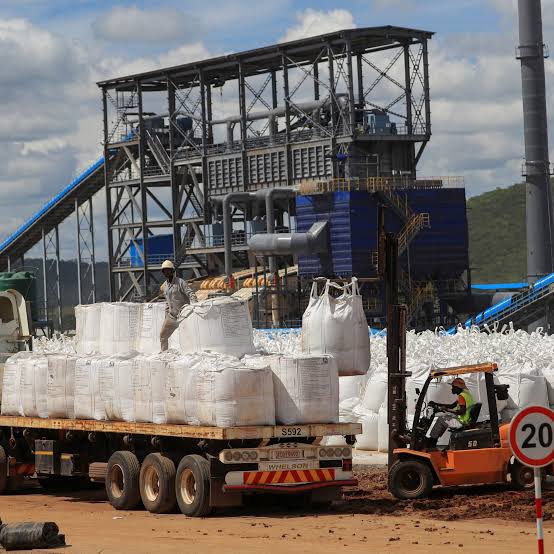
In the hills of Bikita, lithium has transformed an old mining district into one of the focal points of Zimbabwe’s scramble for critical minerals.
But as production expands at Bikita Minerals, so too does a politically charged question: how much of the wealth beneath the ground should government take, and how much should remain with investors and the communities living alongside the mine?
The question has become sharper as Zimbabwe tightens its mining tax regime.
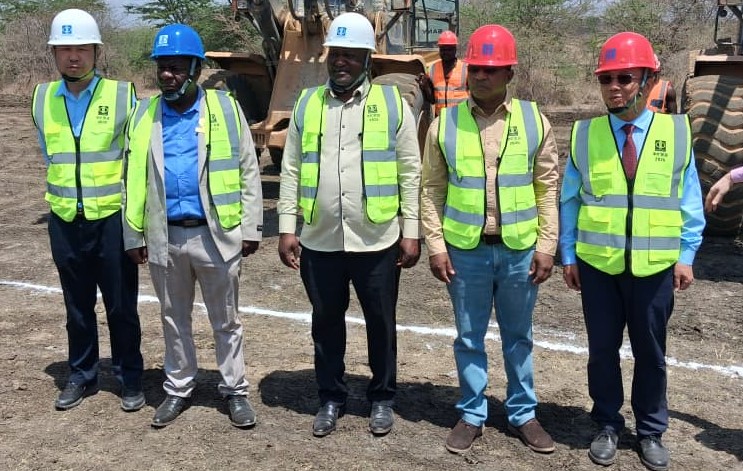
Bikita Minerals, owned by China’s Sinomine Resource Group, was acquired for US$180 million in 2022. The company subsequently announced a US$300 million investment to expand production and extend the mine’s life.
By 2023, the company was projecting exports of US$500 million that year, rising to US$800 million by 2025.
Those numbers explain why taxation has become more than a technical Treasury issue.
Zimbabwe recorded US$5.495 billion in gross mining revenue in 2024 and US$747 million in mining tax revenue, according to Treasury figures cited in the 2026 National Budget.
That amounted to an effective tax rate of about 14 percent across the sector. Government argued that the fiscal system needed to capture more value from a mining boom in which investors were benefiting from high commodity prices.
For lithium, the pressure has intensified.
From January 2026, government introduced a 10 percent export tax on unbeneficiated lithium ore and concentrate, while lithium sulphate attracts no such export tax.
The policy is explicitly linked to beneficiation: Zimbabwe wants more processing to happen locally before minerals leave the country.
The politics is therefore not simply about taxing a mine. It is about deciding what Zimbabwe’s mineral wealth should produce beyond export earnings.
Industry players, however, say the burden is becoming excessive. In April, lithium producers told Mining Zimbabwe that taxes and levies could consume nearly 40 percent of sales revenue.
The industry cited royalties, the export tax, community-development obligations, marketing fees and other charges as part of the burden.
That argument comes as lithium prices remain volatile. Zimbabwe’s spodumene exports rose 11 percent in 2025 to 1.128 million tonnes, but export revenue was almost unchanged at US$513.8 million because of weaker prices.
Prices subsequently recovered in early 2026, highlighting the danger for both government and miners of building fiscal policy around commodity booms.
For communities around Bikita, the debate is more tangible.
The mine has reported employing more than 1,000 workers directly and thousands more through contractors, while saying about 80 percent of its workforce comes from Bikita, Gutu and Zaka.
Yet local youth have continued demanding greater access to jobs and benefits, showing that the presence of a valuable mineral does not automatically settle questions of who benefits.
Government now faces a delicate balancing act. It wants higher mineral revenues, local processing and more jobs, while investors want fiscal certainty and sufficient returns to justify billions of dollars in capital.
Bikita illustrates the dilemma perfectly: tax too little and Zimbabwe risks exporting wealth without capturing enough value; tax too heavily and the investment needed to extract and process that wealth may become harder to sustain.
The politics of mineral taxation, ultimately, is the politics of distribution — deciding who gets what from the rocks beneath Bikita.