EnviroPress Reporter
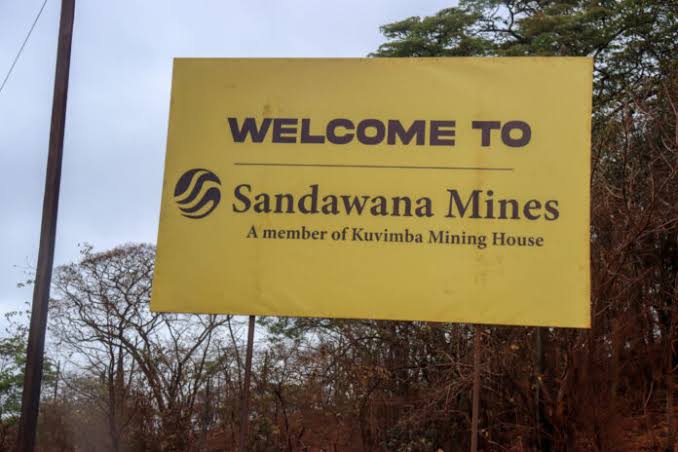
MBERENGWA — In the dry, mineral-rich landscape around Sandawana Mine, the politics of Zimbabwe’s critical-minerals ambitions is no longer an abstract debate about electric vehicles and global supply chains.
It is being played out over land, jobs, mining rights and who gets to benefit from the rocks beneath rural communities.
Sandawana, about 65 kilometres south of Mberengwa town in Midlands Province, has been associated with some of the world’s finest emeralds since commercial production began in the late 1950s. Today, lithium has given the old mining district a new strategic importance.
The scale of that opportunity became clearer last month when state-owned Mutapa Energy Resources announced a JORC-compliant lithium resource of 39.9 million tonnes at 1.39% lithium oxide in Block A.
Crucially, Block A covers only about 30% of the company’s 3,800-hectare concession, leaving most of the ground unexplored. Mutapa says further exploration could substantially increase the resource.
That geological wealth has raised the stakes for both Harare and the communities surrounding the mine.
For villagers and artisanal miners, Sandawana’s lithium boom has brought a familiar question: how can a place sitting on valuable minerals remain poor?
Traditional leaders have previously pressed the mine operator to provide roads, health facilities, clean water and other infrastructure, arguing that communities hosting lithium and associated minerals should see tangible benefits.
The tension is partly rooted in history. Research on Mberengwa’s mining industry documents the displacement of communities and the disruption of agriculture associated with mining, followed by unemployment and poverty when large operations closed. Small-scale mining subsequently became an important livelihood.
The lithium rush has revived those old fault lines.
Studies and investigations into the Sandawana area have documented disputes involving artisanal miners, villagers and large-scale mining interests.
Researchers have also recorded claims that local miners were pushed away from mineral-rich areas as formal operations expanded. Such allegations are politically sensitive and, in some cases, difficult to independently verify.
Yet the politics extends beyond Mberengwa.
Zimbabwe has increasingly used mineral-export restrictions to force value addition at home. In February, the government temporarily banned exports of raw minerals and lithium concentrates, citing leakages and malpractice. It has also imposed measures designed to push miners towards domestic processing.
Now Sandawana faces a deadline: the government’s planned ban on lithium-concentrate exports from January 1, 2027.
Reuters reported in June that Sandawana was among the projects still at the feasibility stage for further lithium processing, while other producers were already building or operating processing facilities.
That creates an uncomfortable contradiction for Zimbabwe. The state wants control over a strategic mineral and more value retained inside the country, but the infrastructure required to achieve that goal is still being built.
Sandawana’s enormous resource may therefore prove to be more than a mining story. It is a test of Zimbabwe’s resource nationalism: whether critical minerals can finance industrialisation without reproducing the exclusion, displacement and political contestation that have long accompanied mining in Mberengwa.
For the people living around Sandawana, the measure of success will ultimately be less about tonnes of lithium beneath their feet than what remains above ground — decent roads, livelihoods, public services and a meaningful stake in the wealth being extracted from their home.