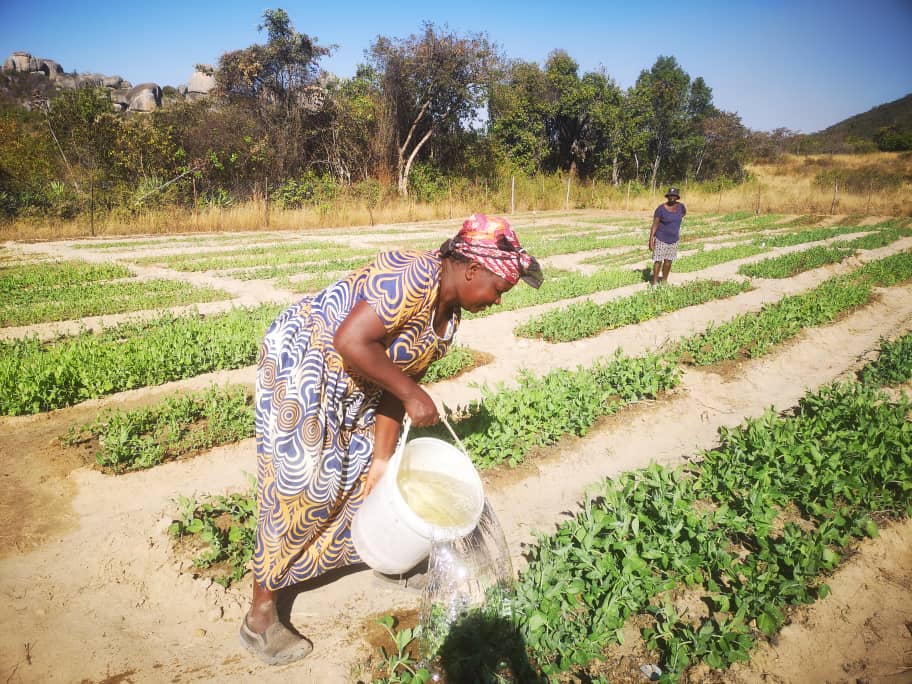
While women provide more than 70 percent of agricultural labour and contribute nearly 80 percent of food production in communal areas, according to a report by WCoZ
MacDonald Mudzaki
As temperatures rise, rainfall becomes increasingly erratic, and droughts intensify across Zimbabwe, women are absorbing much of the cost through unpaid labour, lost livelihoods, reduced economic opportunities, and heightened exposure to danger.
Climate change is rapidly becoming one of Zimbabwe’s least recognized gender and human rights challenges.
Zimbabwe’s 2022 census recorded a population of 15.18 million people, nearly 52 percent of whom are women. Roughly 67 percent live in rural areas, where many depend directly on rain-fed agriculture, forests, and natural water sources for survival.
ZIMSTAT’s 2025 Time Use Survey revealed a stark disparity: 89.9 percent of women engage in unpaid domestic work daily, compared with 51.7 percent of men. Women spend an average of 3.6 hours a day on unpaid domestic labor—three times the 1.2 hours recorded for men. Among household heads, female heads spend 3.8 hours daily on unpaid work, compared to just 1.2 hours for male heads.
The Women’s Coalition of Zimbabwe (WCoZ), in its 2026 State of Women Report, laments that women remain largely relegated to household water collection and firewood gathering. These chores are made increasingly difficult by climate change and environmental degradation; in some drought-affected communities, women now spend between five and ten hours a day securing these essential resources.
“Climate shocks in Zimbabwe are not gender-neutral, but rather events layered on top of existing inequality; they actively produce and deepen it,” WCoZ stated in the report.
WCoZ directly links environmental shocks to broader social consequences: when a climate shock destroys household income, it swells the care burden on women and girls, driving early marriages that force young girls out of school.
While women provide more than 70 percent of agricultural labour and contribute nearly 80 percent of food production in communal areas, the report notes that they continue to face severe restrictions in accessing land, owning productive assets, and participating in environmental decision-making. Notably, only 8.2 percent of adult women hold legally recognized land rights.
Despite these systemic barriers, women-led initiatives are demonstrating practical, grassroots forms of climate adaptation. The coalition documented successful local efforts, including conservation farming techniques like dhiga udye (pfumvudza/zero-tillage), food preservation, the cultivation of indigenous seeds like millet and sorghum, agricultural value addition, and local water infrastructure projects.
Similarly, solar-powered irrigation schemes have demonstrated the transformative potential of infrastructure to lighten women’s daily labor while boosting agricultural productivity.
The Zimbabwe Gender Commission (ZGC), the constitutional body tasked with monitoring gender equality, confirms that climate shocks are widening existing gaps.
“Climate shocks and environmental degradation are exacerbating existing inequalities by increasing women’s unpaid care work, driving rising cases of gender-based violence and child marriages, limiting women’s access to and control over productive resources like land and water, and causing loss of livelihoods,” the Commission noted.
The Commission emphasized that these impacts violate constitutional rights to human dignity, equality, health, and social participation.
World Bank climate records show a steady decline in rainfall in recent decades alongside rising mean annual temperatures between 1970 and 2016. The 2025/26 agricultural season delivered another severe test, marked by delayed, erratic rains followed by a prolonged dry spell—a devastating blow for a nation where around 80 percent of agricultural production remains rain-fed.
World Bank data further highlights that only about 30 percent of the population has access to clean cooking fuels and technologies, while forest cover plummeted from 57 percent in 1990 down to 36 percent by 2015.
Mutsa Murombedzi, a legislator from Mashonaland West, describes climate change as an inherently gendered problem because women bear the physical burden of securing basic resources from fields and rivers.
“We say climate change is a gendered problem because women are the ones who attend to the fields, who go and look for water, who go and look for firewood,” Murombedzi told EnviroPress
She added that changing environmental conditions force women further into wildlife habitats:
“We have had a lot of women taken by crocodiles in the rivers, women trampled to death by elephants, and lions destroying livestock in the process.”
On May 2, 2025, 45-year-old Virginia Nyoni was attacked by a crocodile while fetching water from the Zambezi River in Hwange; she succumbed to her injuries 12 days later.
In Chiredzi, Ponai Mafusire lost a leg to a crocodile while washing clothes on a riverbank, and in Mbire, Netty Mutenhaunga lost an arm in a crocodile attack while crossing a river.
A 2025 peer-reviewed study analyzing the Zimbabwe Parks and Wildlife Management Authority’s human-wildlife conflict database revealed that crocodile and elephant attacks accounted for 83 percent of human-wildlife conflict deaths nationwide. Total recorded deaths jumped from 17 in 2016 to 67 in 2022. As long as water is not brought closer to communities, women are forced to walk further into danger.
This burden is far from evenly distributed as young girls face compounded vulnerability, with families frequently withdrawing them from school to shoulder extra household chores during climate shocks. Older women, women living with disabilities, and those in isolated rural areas encounter layered barriers, while female-headed households consistently operate with fewer assets and less access to credit, transport, and critical weather information.
Theresa Mugadza, research lead for the WCoZ 2026 report, legal scholar, human rights advocate, and governance expert, pointed out that Zimbabwe’s core failure is not a lack of policy, but a failure of coordinated execution.
“At this moment policy outpaces implementation, which is very concerning,” Mugadza said.
Zimbabwe’s Constitution guarantees equality on the basis of sex and gender, and the National Gender Policy explicitly commits the government to gender-responsive development. The national Climate Change Gender Action Plan recognizes women as central actors in climate resilience. Furthermore, Zimbabwe has ratified CEDAW and the Maputo Protocol, and is a signatory to both the Paris Agreement and the UN Sustainable Development Goals.
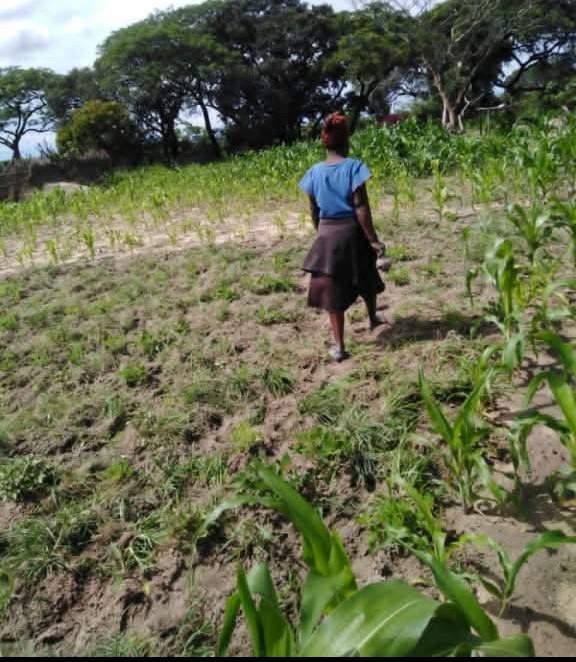
Caroline Mutimbanyoka of the Sprout Women Empowerment Trust argues that effective adaptation requires tackling resource ownership directly.
“Our collective power is our strength. We will not rest until we see women controlling the land. We will not rest until women have access to fields. We will not rest until we see women holding title deeds,” Mutimbanyoka said.
For Obert Gonzo, Executive Director of Family Care Trust, financial independence must accompany legal rights.
“Cash changes everything,” Gonzo stated. “When women have incomes, they are better able to cope with climate shock.”