By Trymore Tagwirei
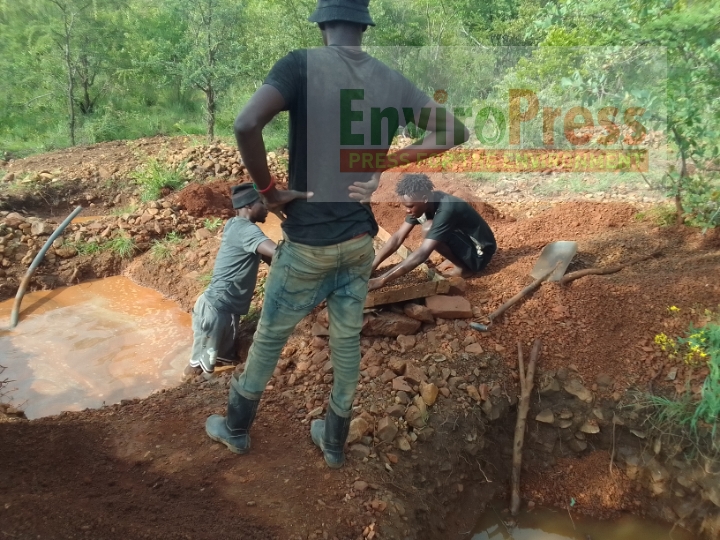
Artisanal gold mining in peri-urban areas of Masvingo has raised concerns of environmental damage due to the widespread use of mercury and rampant deforestation, it has been established.
Artisanal miners who spoke to EnviroPress said although they understood that the use of mercury in gold mining was outlawed in December 2020, there was no viable choice for them.
Sarah Ruzvidzo, who has been involved in mining for the past decade, said mercury remained popular among miners because of its effectiveness in recovering gold.
“I have been using mercury because it makes it easier for us to recover gold. We find it effective in capturing gold during processing,” said Ruzvidzo, who has mining interests close to Manyama Business Centre on the road to Nemanwa.
Tafadzwa Muguti, another miner, said convincing miners to abandon mercury would be difficult because it was the only method many knew for extracting gold.
“Mercury is the only method we know that makes it easy for us to extract gold. It is difficult to convince other miners to stop using it because they are used to this method and rely on it to recover gold,” said Muguti.
He said alternative gold extraction methods—including direct smelting and chemical leaching using cyanide—required more investment in equipment and infrastructure, which they could not afford.
READ MORE: Mercury continues to dominate Mberengwa gold processing
Toxic mercury runoff contaminates river systems in Chivi
Besides the use of mercury, the environment also faces the strain of deforestation in places such as Bondolfi following the recent gold rush.
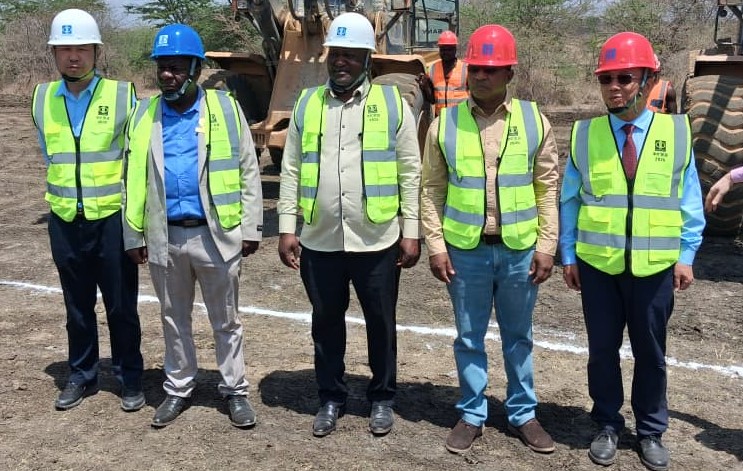
On the edges of Chamanyoka Mountain under Chief Charumbira, excavation and mining activities that are said to involve Chinese nationals have resulted in the clearing of extensive stretches of trees, raising concerns about deforestation, soil erosion, and the destruction of natural habitats.
Milton Muusha, Environmental Management Agency (EMA) Masvingo Provincial Manager, said mining-related pollution, deforestation, and poor waste management continued to threaten the environment.
“The environment continues to suffer from pollution caused by activities such as the use of chemicals in mining areas, deforestation, and poor waste management,” said Muusha.
In December 2020, the Parliament of Zimbabwe ratified the Minamata Convention, effectively marking the beginning of a ban on the use of mercury.
Adopted at the 5th Session of the Intergovernmental Negotiating Committee in Geneva, Switzerland, on 19 January 2013, the Minamata Convention is a global treaty whose objective is to protect human health and the environment from the adverse effects of mercury.
Mercury usage in gold mining contaminates water sources and soil, leading to bioaccumulation whereby the metal ends up in the food chain. People residing close to artisanal mining activities can accumulate mercury in their bodies, which is particularly toxic to children, pregnant women, and the elderly.