EnviroPress Reporter
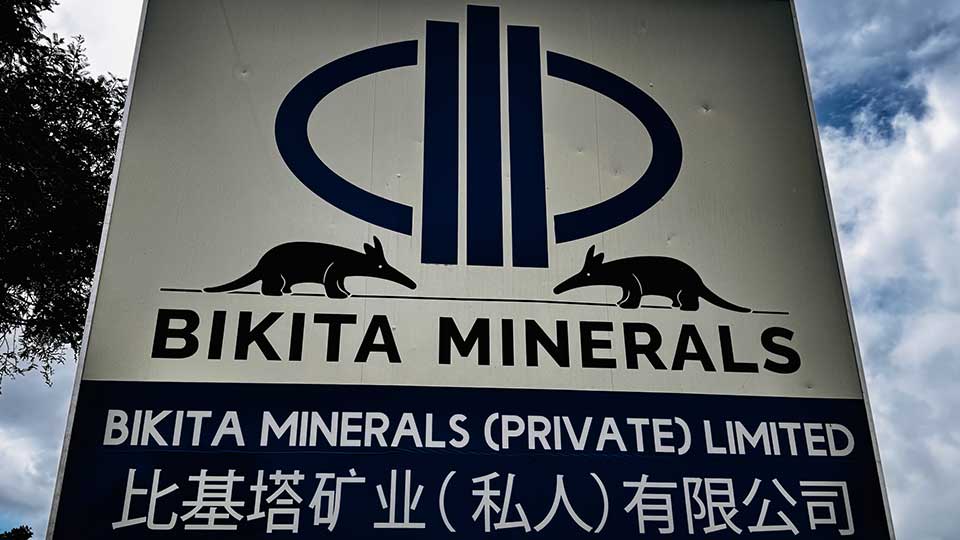
BIKITA — For residents living on the fringes of Bikita Minerals, the question is no longer whether the lithium boom is transforming their community. It is whether their repeated grievances will produce answers — and practical solutions.
Murape villagers have spent years raising concerns over water access, displacement, land and environmental impacts linked to the expansion of the Chinese-owned Sinomine Resource Group operation.
Some of those complaints have now reached the Zimbabwe Human Rights Commission (ZHRC), the Environmental Management Agency (EMA) and civil society organisations. Yet, for affected families, resolution remains elusive.
At the centre of the dispute is a communal water source that residents say sustained Murape for decades.
Investigations published since 2024 report that construction of a slime dam cut villagers off from the source, forcing some to travel several kilometres for water. More than 300 people were initially reported to have been affected.
The mine has disputed aspects of that account. In its March 2025 response to the Business and Human Rights Resource Centre, Bikita Minerals said the well had been considered unsafe for human consumption and that alternative water infrastructure had been provided.
The company said it had drilled more than 36 boreholes in Bikita West and Masvingo North and was working on recommendations arising from a ZHRC investigation.
But access remains a practical problem.
In July 2025, Bikita Minerals said remaining Murape residents could collect water from a tap inside the mine while discussions continued over the relocation of eight families. Villagers interviewed by EnviroPress said the distance — about five kilometres for some — made the arrangement difficult to sustain.
The dispute has also moved beyond water.
In its 2025 environmental-rights investigation, the ZHRC recommended relocation of eight households, dust suppression under EMA supervision and additional boreholes for residents whose water sources had been affected.
Questions about transparency have added another layer to the conflict. In January 2026, the Bikita Land Institute of Development petitioned EMA seeking environmental compliance documents relating to the mine.
The organisation said residents needed access to the information to understand the project’s environmental obligations.
Bikita Minerals has maintained that proper consultations were conducted and that the relevant environmental certificates exist.
Its spokesperson told EnviroPress in 2025 that consultations involved traditional leaders, councillors, village heads and other community stakeholders.
There has nevertheless been a notable development this year. In June, a report said government halted plans to expand the mine’s slime dam because land for relocating affected villagers was unavailable.
The same report said the ZHRC had recently facilitated an alternative-dispute-resolution engagement involving villagers, the company and local authorities. Bikita Minerals said the proposed expansion was still at the conceptual stage and that it was consulting authorities.
That dialogue could prove important.
Bikita Minerals says its mission includes creating lasting benefits for surrounding communities, while its public community-engagement programme highlights education, health and economic empowerment.
For Murape residents, however, development will ultimately be measured less by corporate promises than by whether longstanding grievances result in clean water, secure homes, transparent information and meaningful remedies.