Opinion
It rippled through townships, flared across newspaper headlines, and surged in WhatsApp voice notes passed from miner to vendor, from student to civil servant. Zimbabwe’s lithium—white gold of the green energy revolution—was being stolen, people said. Foreign companies were walking away with fortunes, leaving behind dust and broken promises.
The numbers sounded outrageous enough to be true. A few hundred dollars to extract a tonne of ore. Tens of thousands earned from it overseas. A 53-fold windfall. It felt like history repeating itself—the old story of Africa exporting raw wealth and importing poverty.
But beneath the outrage, something didn’t add up.
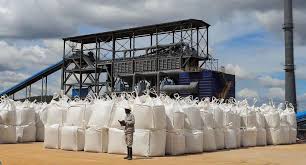
At a sprawling lithium site in the dry southeast, the rocks don’t look like riches. They are dull, grey, unremarkable. Trucks grind across the earth, hauling tonnes of crushed stone that, to the untrained eye, could be anything. This is spodumene concentrate—about 5percent lithium content. Not a finished product, not even close.
What the headlines rarely explain is that these rocks are only the beginning of a long, expensive journey.
To produce a single tonne of battery-grade lithium carbonate—the chemical that powers electric vehicles—requires roughly ten tonnes of this concentrate. Ten tonnes dug, crushed, processed, transported. Ten tonnes paid for upfront.
By the time that tonne becomes a high-value chemical, the cost equation has already shifted dramatically. The supposed US$370 extraction cost balloons into something far more complex, layered with logistics, processing losses, and industrial transformation.
The “windfall” starts to look less like a jackpot—and more like a misunderstanding.
Still, the deeper question lingers: even if the numbers are misunderstood, who really benefits?
In Harare, government officials quietly point to a different set of figures—ones that rarely make headlines. Every shipment leaving the country carries a heavy fiscal shadow. Export taxes. Royalties. Corporate income taxes. Mandatory foreign currency surrender requirements.
Stack them together, and more than half of the declared value flows back into the state.
That money doesn’t announce itself. It doesn’t trend online. It moves silently into treasury accounts, into budgets that fund roads, hospitals, and schools—often imperfectly, sometimes invisibly, but undeniably.
Meanwhile, investors shoulder a different reality—one defined by volatility.
In 2022, lithium prices soared, feeding the narrative of easy riches. By 2025, they had collapsed by nearly 90 percent. Multi-million-dollar plants suddenly faced the possibility of becoming stranded assets. Losses mounted. Yet taxes—export levies, royalties—remained fixed, payable even when profits vanished.
Mining, it turns out, is not a guaranteed fortune. It is a gamble played on a global stage.
Then there are the whispers about what’s being “taken for free.”
Rare elements—caesium, rubidium, beryllium—are said to be slipping out of the country unnoticed, hidden within shipments. Priceless materials, critics argue, quietly enriching outsiders.
But in the tailings of the mines, reality sits in microscopic traces.
These elements exist, yes—but often in quantities so small they are almost theoretical. Extracting them requires specialised plants, proprietary technology, and massive capital investment. Without that infrastructure, they remain locked in waste, not secretly exported riches.
Even if extracted, the global market for them is tiny—so small that large-scale production could crash prices overnight.
The idea of effortless, hidden wealth begins to unravel under scrutiny.
None of this erases the tension.
Because at its core, the debate is not just about chemistry or economics. It is about trust.
Zimbabwe sits on one of the world’s most strategic resources at a time when the planet is racing toward electrification. Lithium is no longer just a mineral; it is a geopolitical asset. Batteries, energy storage, electric vehicles—entire industries depend on it.
And Zimbabwe, despite its reserves, is not the dominant player. It ranks behind giants like Australia and China, holding roughly a tenth of global output. It cannot dictate prices. It competes.
That reality complicates everything.
Push too hard—through sudden policy shifts or export bans—and investors retreat. Move too slowly, and the country risks remaining a supplier of raw materials in a world chasing value addition.
Somewhere between those extremes lies a narrow path forward.
Back at the mine, the trucks keep moving.
Billions of dollars are being committed—processing plants rising, new technologies being installed, partnerships forming. Companies are betting on the future, even as markets fluctuate and politics swirl.
The question is whether Zimbabwe can turn that momentum into something lasting.
Because lithium, in the ground, is just rock.
Its true value depends on what happens above it—on policy, on trust, on the balance between national interest and global capital. On whether outrage can give way to understanding, and whether understanding can lead to better decisions.
The world is watching. The energy transition depends on places like this.
And in the end, the real story is not about a 53-fold windfall.
It is about whether a nation can transform buried potential into shared prosperity—before the next cycle of boom and bust begins again.