EnviroPress Reporter
For young people in Mberengwa, the revival of Sandawana Mine has carried the promise of something the district has struggled to provide for decades: a reliable pathway from rural poverty into decent work.
But as lithium mining expands, that promise is colliding with a more complicated reality.
Sandawana, about 65 kilometres south of Mberengwa town, has a long mining history dating back to the discovery of its world-famous emeralds in the 1950s. Today, the mine is at the centre of Zimbabwe’s lithium ambitions, with government envisioning it as part of a rural industrialisation drive.
For the youth living around the mine, however, the measure of success is less about tonnes of lithium or the size of processing plants and more about whether they can find meaningful work close to home.
There is evidence that the mine has created substantial employment. In 2023, reports put the workforce at between 1,000 and 1,500, with company and community leaders highlighting the preference given to local workers. By 2024, Sandawana was reported to have employed more than 1,000 local residents following renewed investment.
Yet those numbers have not eliminated frustration.
A recent community call published by EnviroPress captured a recurring complaint from Mberengwa youth: development projects such as boreholes are welcome, but young people want access to jobs and opportunities that allow them to participate directly in the mining economy. One contributor argued that communities need partnership and employment, rather than charity.
The concern is not simply whether jobs exist, but what kind of jobs are available, who gets them and how secure they are.
A CNRG assessment reported that workers at Sandawana had been employed on short, fixed-term contracts, while its wider research found local employment in lithium-producing communities was often concentrated in low-skilled and unskilled positions.
That creates a difficult gap between expectation and reality. A young person may live beside a globally valuable mineral deposit, yet still struggle to obtain the technical qualifications, experience or networks required for better-paying positions.
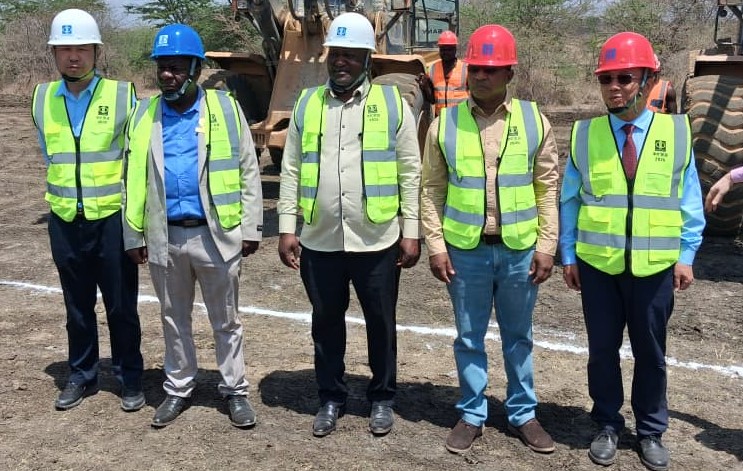
The stakes are rising. In March 2026, Vice-President Constantino Chiwenga toured Sandawana as government promoted plans for expanded lithium processing and rural industrialisation. A three-million-tonne-per-year concentrator was reported to be planned, with construction expected to commence in 2026.
Traditional leaders have already demanded that local people benefit through jobs, contracts, infrastructure, training and services, insisting that the resource should first improve the lives of communities hosting it.
For Mberengwa’s young people, therefore, Sandawana’s real test is no longer whether lithium can generate wealth.
It is whether that wealth can translate into skills, stable employment, local businesses and a future that young people can see for themselves without having to leave home.
Until then, the mine’s glittering lithium promise will remain measured against a stubborn rural reality: having minerals beneath your feet is not the same as having opportunity in your hands.