EnviroPress Reporter
At Sandawana Mine, the number that attracts attention is 50 percent.
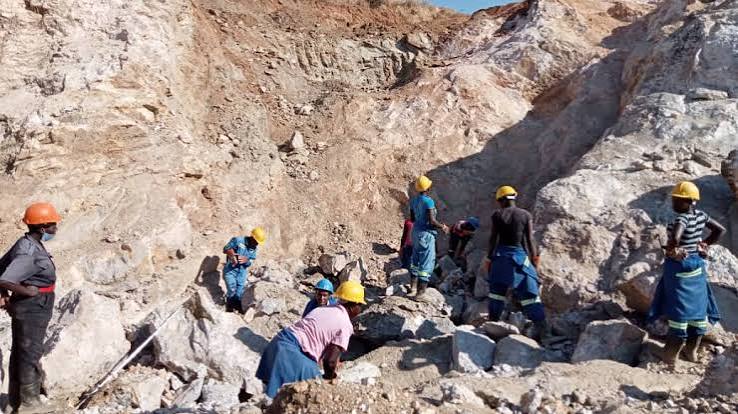
The lithium producer said women made up more than half of its roughly 700 employees at the end of 2024, a dramatic increase from the 20 percent female-representation target previously announced by its parent, Kuvimba Mining House.
On paper, it is a striking figure for an industry where women have historically been under-represented.
But in the communities surrounding Sandawana, the story behind that percentage is more complicated.
A study by the Centre for Natural Resource Governance (CNRG) found that women in the area were so marginalised from formal mining that many did not regard mine employment as an option at all.
Researchers visiting the mine found men seeking jobs while women were largely selling food and other wares outside the operation.
That finding matters because Sandawana is not a small operation. The mine stretches along a 21-kilometre strip of the Mweza Mountain Range and is being developed as a major lithium and other-minerals operation.
Its revival has brought substantial investment and employment to Mberengwa, a district where communities have long complained of limited economic opportunities.
The employment picture has also changed sharply over time. In 2023, reports put total employment at about 1,500, including contractors, with women accounting for about 20 percent.
By the end of 2024, the company was reporting more than 50 percent women among its 700 employees. The differing totals reflect changes in operations and staffing, but they also show why a percentage without context can obscure the lived reality of mining communities.
For women outside the payroll, the lithium boom has brought a different experience.
CNRG reported that hundreds of women briefly participated financially when artisanal lithium mining expanded in Mberengwa.
That opportunity ended after authorities moved to stop informal lithium mining. The organisation argues that the episode demonstrated that women can participate in mining when economic space is available to them.
The wider costs of mining also fall unevenly. CNRG’s research reported complaints from villagers about pollution, damaged homes, displacement pressures and lost livelihoods, while highlighting women’s exclusion from economic opportunities.
These are allegations contained in the organisation’s research and have not been independently verified in every instance.
Sandawana has simultaneously promised wider community benefits, including roads, water infrastructure, improved healthcare and local economic development.
The company has also said its diversity policy is intended to improve representation of women and other historically marginalised groups.
The challenge now is to make the 50 percent figure mean more than a statistic.
A woman employed at the mine changes the economics of a household. A woman with technical skills, a supervisory role or a voice in community decisions changes the expectations of the next generation.
For Sandawana and Mberengwa, the real test of inclusion may therefore not be how many women appear on the payroll, but what jobs they hold, what opportunities reach women beyond the mine gate, and whether they have a meaningful stake in decisions about the mineral wealth beneath their communities.
That is where the headline percentage ends — and the harder story begins.