EnviroPress Reporter
MBERENGWA — For generations, the people living around Sandawana have known the hills for emeralds, tantalite and other minerals. Lithium has now put the remote Mberengwa mining district at the centre of Zimbabwe’s ambitions to become a major player in the global battery-minerals industry.
But for villagers living beside the mine, the question is increasingly straightforward: how much of that wealth is actually reaching them?
Sandawana’s lithium story is entering a new phase. In July, Mutapa Energy Resources announced a 39.9-million-tonne certified lithium resource in Block A, covering about 30% of its roughly 3,800-hectare concession.
Mutapa said the resource could help unlock international financing and further investment.
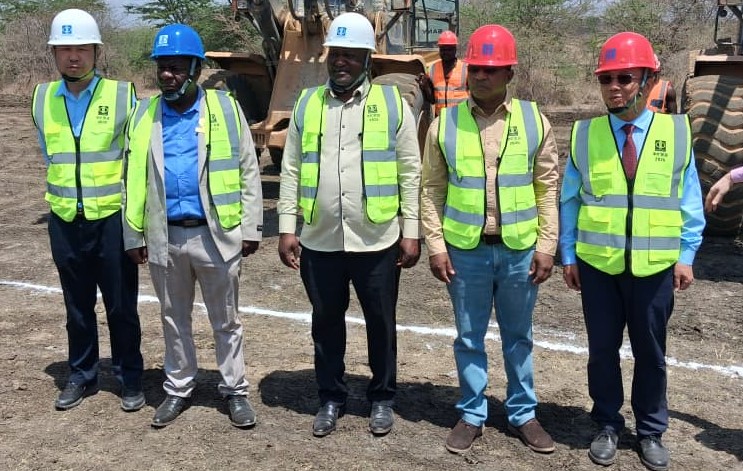
The stakes are high. Plans are on the table for a large lithium concentrator, with commissioning targeted for 2027.
The project is expected to process hundreds of thousands of tonnes of ore annually, potentially making Sandawana one of Zimbabwe’s biggest lithium operations.
For Mberengwa, however, the boom is being measured less in tonnes than in jobs, roads, water and schools.
Sandawana has reported significant local employment. At one stage, the mine said it employed about 1,500 people, with roughly 80% of opportunities going to locals. In 2024, local media reported that more than 1,000 residents had been employed during an expansion phase.
Yet employment has not been a straight upward journey. Residents told EnviroPress in 2025 that hundreds of workers had lost jobs when weaker lithium prices forced the company to scale back.
The subsequent recruitment of 26 locals for road rehabilitation offered some relief, but also underscored how vulnerable household incomes remain to the lithium price cycle.
The mine has also spent money beyond the pit. Sandawana reported US$475,000 in community projects in 2025, including nearly US$400,000 towards upgrading a 60-kilometre gravel road, three solar-powered boreholes and renovation work at Chebvute Secondary School.
The company has said it intends to expand borehole provision around the mine.
Those interventions are tangible. But they also expose the scale of the deficit.
In 2023, Mberengwa chiefs were already demanding better roads, health facilities and clean water, arguing that communities hosting the minerals should see a meaningful share of the benefits.
Civil-society research has raised another concern: workers at Sandawana have reportedly faced overcrowded accommodation, with some living in old mining houses and others in tents.
The debate is therefore no longer whether Sandawana is generating value. It plainly is. The harder question is who captures that value, and whether the benefits will survive the boom.
With Zimbabwe pushing beneficiation and the mine moving towards a much larger processing operation, Mberengwa is approaching a defining test. If billions of dollars in mineral potential can translate into decent jobs, functioning infrastructure, reliable water, better services and viable local businesses, lithium could become a development engine.
If not, Sandawana may simply become another chapter in Zimbabwe’s long history of extracting wealth from rural communities while leaving the people living above the minerals asking what was left behind.