EnviroPress Reporter
For generations, the road into Sandawana has been more than a route to a mine. It is a lifeline for communities scattered across the remote parts of Mberengwa, connecting villagers to schools, clinics, markets and the district’s economic centres.
But as lithium mining has accelerated, a simple question has become increasingly difficult to answer: who is responsible for keeping the road open?
The answer appears to be shared — and that is precisely where the problem lies.
Mberengwa Rural District Council says not all roads in the district fall under its direct responsibility. Its own records acknowledge that road conditions are poor, with some routes becoming impassable, particularly during the rainy season. The council has nevertheless undertaken rehabilitation work across the district.
Sandawana Mine, operated by government-controlled Kuvimba Mining House, has increasingly stepped into that gap.
In 2025, the mine said it had spent about US$400,000 upgrading a 60-kilometre gravel road linking the mine to the Beitbridge highway. By late 2025, the company reported that the project was about 75% complete. It also said it was supporting the Rural Infrastructure Development Agency (RIDA) by repairing road-maintenance equipment and providing fuel.
That investment is significant, but it has not ended the argument over responsibility.
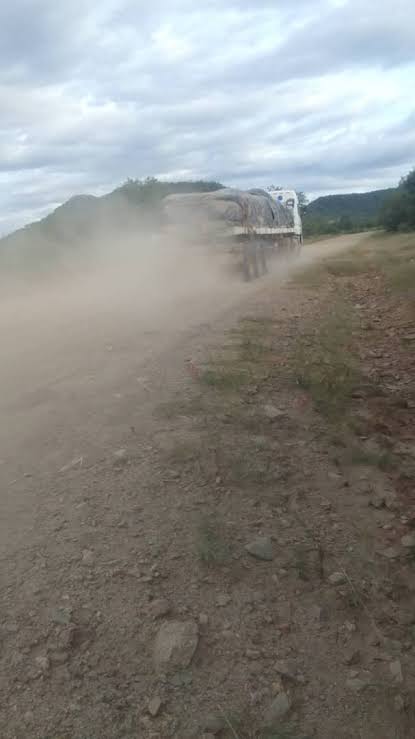
Villagers and local leaders say heavy mine traffic has placed extraordinary pressure on roads that were never designed for the current volume of haulage. In March 2025, Ward 29 councillor Collen Mhloro told EnviroPress that more than 40 heavy vehicles were using the route to Gwanda each day, damaging gravel roads and increasing dust pollution in surrounding villages.
A separate 2025 study on lithium mining in Zimbabwe reported that communities in Mberengwa were concerned about heavy trucks damaging narrow roads and ageing bridges, including infrastructure dating from the colonial period.
The issue is not new. In 2023, Sandawana management said it had committed US$110 million towards road maintenance and rehabilitation, including work towards the West Nicholson route. Traditional leaders, meanwhile, were demanding durable roads rather than temporary repairs.
The mine’s case is that it is already spending heavily on infrastructure that benefits both its operations and neighbouring communities. Residents counter that the mine is also the biggest user of roads being degraded by mineral haulage.
Both arguments can be true.
The more urgent question is whether Zimbabwe’s road authorities, local government and the mining company have a clear, enforceable arrangement for maintaining the routes that connect Sandawana to the outside world.
For residents, this is not an abstract policy dispute. A broken bridge can delay an ambulance. A damaged road can raise transport costs. A cloud of dust can become part of daily life.