EnviroPress Reporter
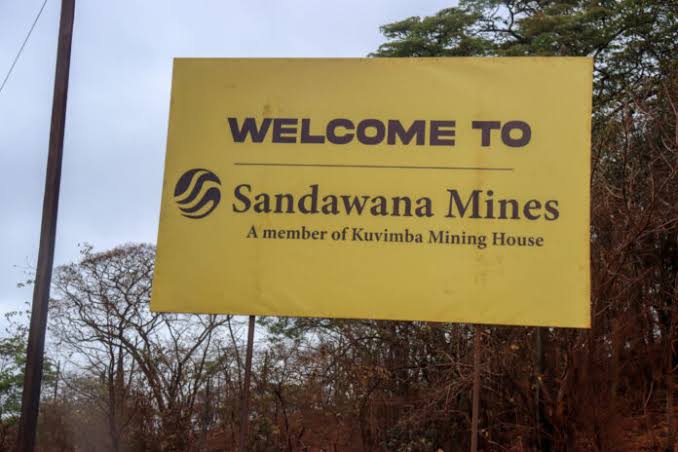
Sandawana Mine is entering a decisive period as Zimbabwe’s January 2027 deadline for ending exports of unprocessed lithium concentrate draws closer, putting pressure on the state-owned operation to turn its processing ambitions into a working plant.
The deadline comes as Sandawana, in Mberengwa, has established itself as one of Zimbabwe’s most significant emerging lithium assets.
In July, its parent company, Mutapa Energy Resources (MER), announced a JORC-compliant resource of 39.9 million tonnes at Block A alone — covering roughly 30% of its 3,800-hectare mining concession. MER says further exploration could push the resource towards 90 million tonnes.
But the size of the resource has sharpened a more immediate question: can Sandawana process what it mines before the export ban takes effect?
The government has maintained that the January 2027 deadline remains in place. Mines Minister Winston Chitando’s successor, Mines Minister Polite Kambamura, said in July that the deadline was still on, despite appeals from lithium producers for more time.
Industry players have argued that the timetable is tight. In June, MER chief executive Innocent Rukweza, also chairman of the Lithium Producers’ Association, appealed for an extension to allow processing projects under construction to be completed.
Sandawana’s response is now beginning to take shape.
The mine is linked to a planned large-scale concentrator being developed with Chinese partners Zhejiang Huayou Cobalt and Tsingshan under a build-operate-transfer arrangement.
Earlier plans put the investment at about US$270 million, with commissioning targeted for 2027.
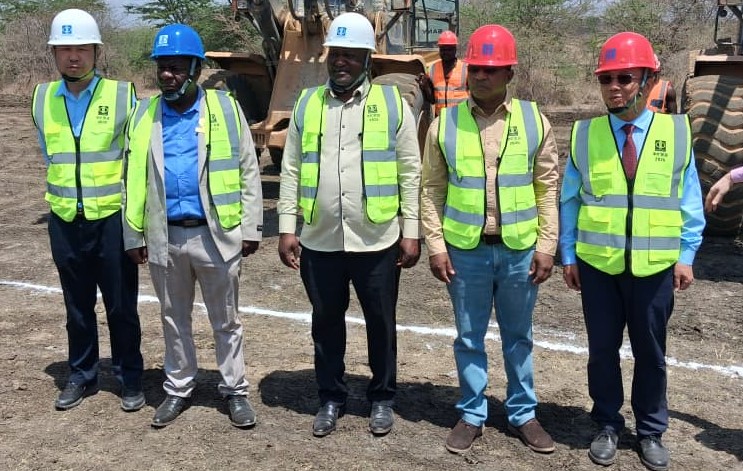
In the latest development, Kuvimba Mining House chief executive Trevor Barnard told stakeholders at Sandawana in August that construction of the concentrator is expected to begin within four to six months, with the project positioned to become Zimbabwe’s largest lithium processing operation.
That timeline places the project squarely against the January deadline — creating little room for delays.
The stakes extend beyond the mine gate. Sandawana’s expansion is being presented as a potential industrial and employment catalyst for Mberengwa, a district where residents have long complained that mineral wealth has not translated sufficiently into local development.
Last year, 26 locals were employed on road rehabilitation work linked to the mine, while the planned processing project has previously been projected to create more than 2,000 jobs in its initial phase.
The expansion also comes with social pressures. A recruitment notice issued during the mine’s expansion indicated that some community members would have to be relocated, with livelihood restoration and engagement with project-affected persons forming part of the process.
For Sandawana, therefore, the next move is no longer simply about extracting more lithium. Its newly confirmed resource has strengthened the investment case; its challenge now is converting that geological potential into processing capacity before policy closes the export route.
With less than five months until January 2027, the race is between construction and the clock.
If Sandawana succeeds, Mberengwa could become an important node in Zimbabwe’s attempt to move from exporting mineral concentrates to producing higher-value lithium products.
If it misses the deadline, the mine — despite its newly certified resource — will face a much harder question over where its concentrate can legally go and how quickly its planned value chain can be completed.