EnviroPress Reporter
MBERENGWA — On the gravel roads around Sandawana, the question of what mining leaves behind is no longer a distant concern.
It is already being asked by communities living alongside one of Zimbabwe’s oldest mining operations, now at the centre of the country’s lithium ambitions.
Sandawana’s mining history stretches back to 1955, when emeralds were first extracted from the area.
The operation later became associated with tantalite and other minerals before its latest revival as a lithium producer.
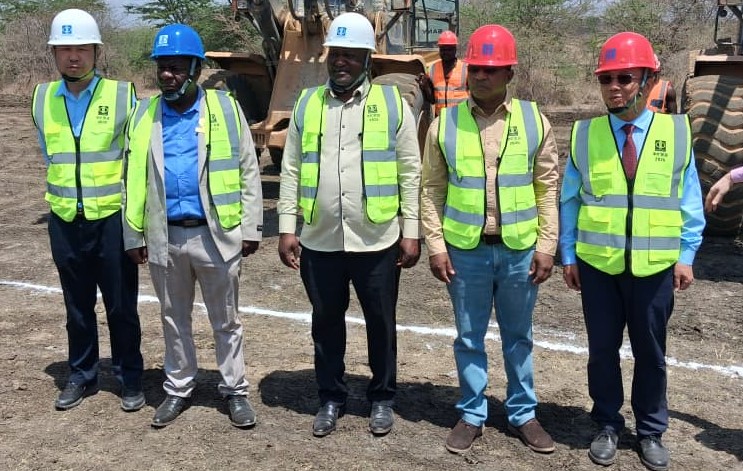
Today, the mine is preparing for another major expansion. In March 2026, Vice-President Constantino Chiwenga visited Sandawana, where construction of a three-million-tonne-per-year lithium concentrator was expected to begin in June and take about 18 months.
The mine covers about 3,836 hectares on the Mweza range.
But for communities in Mberengwa, the value of the project will ultimately be measured in more than tonnes of concentrate.
Traditional leaders have repeatedly demanded roads, water, health facilities and schools. In 2023, Chief Ngungumbane said the district needed basic infrastructure and called on the mining company to improve livelihoods alongside extracting lithium.
The same year, leaders raised concerns about Sandawana Primary School, which is located too close to mining activities and was considered unsafe for pupils and teachers.
The road question has become particularly difficult to ignore.
Heavy trucks transporting lithium have been blamed for damaging local roads and creating safety hazards.
A 2024 investigation by CITE reported lithium rocks spilling from trucks onto roads, while a 2025 report recorded continuing complaints from villagers over road damage caused by haulage from Sandawana.
There are also signs of tangible investment. Sandawana reported spending nearly US$500,000 on community programmes in 2025, including road rehabilitation, renovation of Chebvute Secondary School and boreholes. About US$400,000 reportedly went towards a 60-kilometre gravel road linking the mine with the Beitbridge road.
Yet independent researchers have painted a more troubling picture. A Centre for Natural Resource Governance report documented community concerns over dust, water and soil pollution, exclusion from employment and inadequate social infrastructure.
The report said residents felt that promises made when the lithium operation was launched had not translated sufficiently into local benefits.
That tension points to the harder question facing Sandawana: what remains when the ore is gone?
Zimbabwean law already provides a framework for that responsibility. The Environmental Management Act empowers authorities to require rehabilitation of degraded mining land, including restoration of soil, vegetation and ecological features.
The Mines and Minerals Act also provides for rehabilitation requirements and procedures when mining operations close or are substantially reduced.
For Mberengwa, however, a successful mine closure should mean more than a rehabilitated pit.
It should mean roads that remain usable without mining trucks, functioning schools and health facilities, reliable water infrastructure, skills that survive beyond mining jobs, and land capable of supporting livelihoods after lithium demand moves elsewhere.
Sandawana is preparing for a new chapter in its long history. The real measure of that chapter will not only be how much lithium leaves Mberengwa, but how much enduring value stays behind.