EnviroPress Reporter
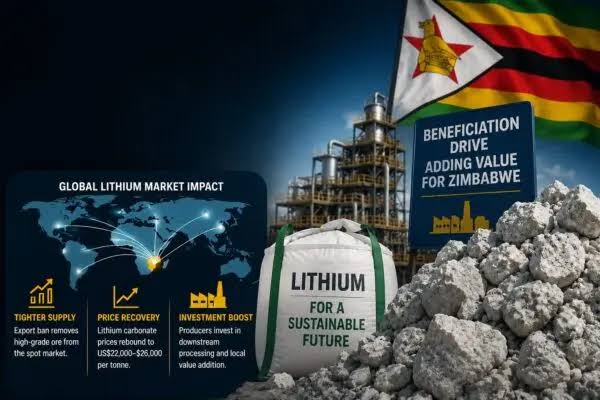
BIKITA — Zimbabwe’s push to extract more value from its lithium is gathering pace at Bikita Minerals, but beneath the promise of jobs, exports and industrialisation lies a harder question: how much environmental and social pressure can the surrounding communities absorb?
Bikita Minerals, owned by China’s Sinomine Resource Group, has undergone a rapid expansion since its acquisition in 2022.
The company has invested hundreds of millions of dollars in new processing facilities, while plans for a lithium sulphate plant are expected to deepen beneficiation at the mine.
The expansion has also increased the mine’s physical footprint. Residents around Murape and other communities have raised concerns about access to water, land and livelihoods as mining infrastructure and tailings facilities expand.
In 2024, investigations reported that construction of a slime dam had cut more than 300 Murape villagers off from a water source they had relied on.
Residents said they were forced to walk more than four kilometres to obtain clean water.
Bikita Minerals disputed aspects of the accounts, saying the affected well had been considered unsafe and that it had provided an alternative borehole. The company says it has drilled more than 36 boreholes in Bikita West and Masvingo North since 2023.
Water pollution has been another flashpoint. Reporting by the Mail & Guardian found that Bikita Minerals was fined US$5,000 by Zimbabwe’s Environmental Management Agency after an effluent discharge into Matezva Dam, a water source serving irrigation and surrounding households. The mine was ordered to clean up the affected water body.
More recently, villagers represented by the Bikita Land Institute of Development petitioned EMA seeking access to environmental impact assessment documents and alleging environmental violations linked to mining and slime-dam construction. The allegations have not been established as fact by a court.
The concerns come as the scale of beneficiation grows. Sinomine says Bikita’s new processing infrastructure is designed to improve recovery of lithium and other minerals, while a 2026 upgrade using X-ray transmission sorting is expected to remove waste rock before flotation, potentially reducing the volume of material entering the processing circuit.
The company also says it is pursuing environmental safeguards, including water recycling, groundwater monitoring, progressive land rehabilitation and biodiversity protection.
Sinomine’s ESG reporting says Bikita is monitoring water and soil quality and implementing measures to reduce pollution risks.
Zimbabwe’s Environmental Management Agency requires mining projects with potential environmental impacts to undergo environmental and social impact assessment before implementation, with certificates subject to renewal.
That regulatory requirement is increasingly important as beneficiation moves from policy slogan to industrial reality.
For Bikita’s neighbours, the debate is therefore no longer simply about whether Zimbabwe should process its minerals locally.
It is about whether the economic value created by beneficiation can coexist with clean water, secure land and healthy communities.
The lithium boom may promise a richer future for Zimbabwe. Around Bikita, residents are demanding that the environmental bill does not become their inheritance