
EnviroPress Reporter
MBERENGWA — The roar of lithium trucks has become part of everyday life in the communities around Sandawana Mine, but Zimbabwe’s abrupt decision to halt raw mineral exports has forced the district to confront a bigger question: what will its mineral wealth leave behind?
On February 25, the Government suspended exports of lithium concentrates and other raw minerals, citing leakages, malpractices and the need to accelerate local value addition.
The move came earlier than the previously announced January 2027 deadline for a ban on lithium concentrate exports.
For Sandawana, one of Zimbabwe’s major lithium operations, the ban was not the end of exports.
In April, the Government granted six large-scale lithium producers, including Mutapa Investment Fund-owned Sandawana, conditional export quotas.
The producers must meet requirements including mineral declaration, improved accountability and progress towards beneficiation.
But on the dusty roads around the mine, the debate is less about export quotas than what mining has delivered locally.
Villagers have repeatedly complained that heavy trucks carrying lithium have damaged roads and bridges while generating dust around homes and shops.
In March, local reports described residents as frustrated that the mineral boom had yet to translate into adequate infrastructure, employment, schools or clinics.
The road problem is not new. A 2024 investigation by CITE found that trucks hauling lithium from Sandawana were spilling rocks onto roads, while the absence of weighbridges contributed to concerns over overloaded vehicles and damage to infrastructure.
There have, however, been signs of local benefit. In 2025, Sandawana recruited 26 Mberengwa residents for road rehabilitation, while earlier reports indicated that hundreds of local jobs had been lost as lithium prices weakened.
Now the mine is preparing for a much bigger transformation.
Mutapa Energy Minerals says Sandawana will develop a lithium concentrator, while a July resource estimate confirmed 39.9 million tonnes of lithium resources in Block A alone — covering only about 30 percent of the mine’s 3,800-hectare claim.
The expansion is already creating new pressures. A recruitment notice issued this year said some community members would have to be relocated as part of the mine expansion, with the company seeking an officer to manage affected households and livelihood restoration.
That makes the export ban more than a trade policy for Mberengwa. It is a test of whether beneficiation can change the relationship between the mine and the community around it.
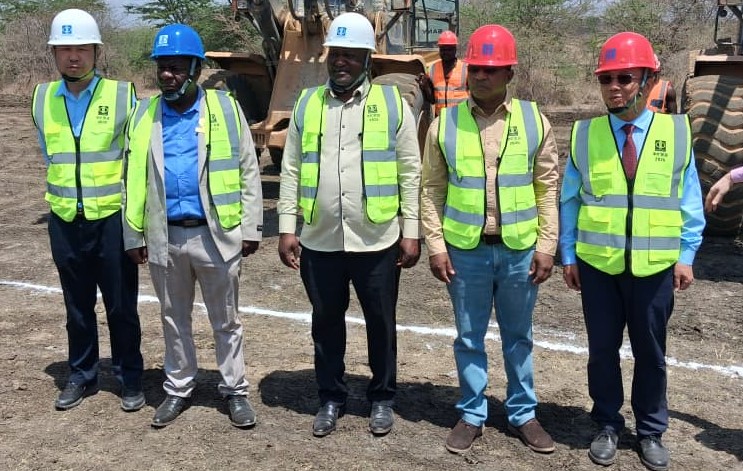
Vice-President Constantino Chiwenga, visiting Sandawana in March, acknowledged the concerns, calling for investment in roads, healthcare, education and other infrastructure so that mining communities can see tangible benefits.
Zimbabwe now has an opportunity to turn Sandawana’s lithium from a stream of trucks leaving rural Mberengwa into an industrial base rooted there.
For residents who have watched the ore leave for years, the measure of success will ultimately be simple: when the lithium leaves, what stays behind?