EnviroPress Reporter
BIKITA — For families living around Bikita Minerals, the lithium boom has turned a simple question of land into a much harder one: what is a fair price for losing a home, a field, a water source or a way of life?
The question has become increasingly urgent as the Chinese-owned mine expands its lithium operations in Bikita.
Sinomine Resource Group acquired Bikita Minerals in 2022 and has invested heavily in mining and processing, with plans for further downstream investment.
Reuters reported that Sinomine has considered investing up to US$500 million in a lithium sulphate plant at the mine.
For communities, however, the value of the mineral beneath their feet is not necessarily reflected in the value placed on what they lose above it.
In Makombo, Bikita West, families displaced to make way for a weir and processing infrastructure have described losing agricultural land and homes.
One resident, John Muringa, told EnviroPress he received US$1,000 after his home was destroyed but said the money was insufficient to rebuild a comparable house. Another resident, Tambudzai Mutyasira, said she lost six hectares of farmland.
The dispute has also reached Murape Village in Ward 11. After complaints over displacement, property rights, water and environmental conditions, the Zimbabwe Human Rights Commission facilitated mediation between affected residents and Bikita Minerals.
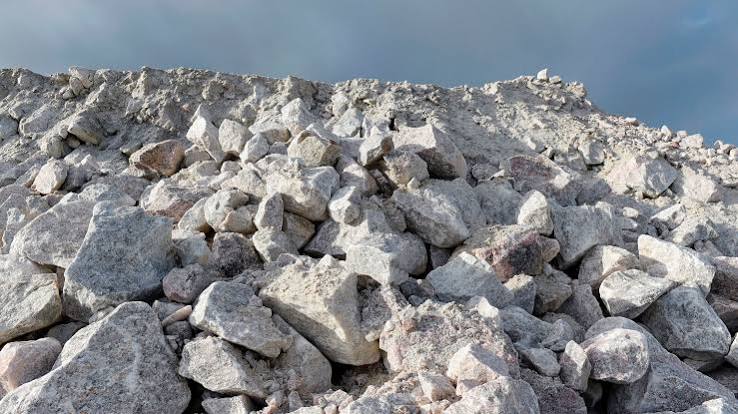
In January 2026, EnviroPress reported that nine families had agreed to relocate under a package of US$1,500 and 20 tonnes of quarry stone per household.
But the figures expose the central problem: compensation is not simply about putting a dollar value on a house.
Zimbabwe’s Mines and Minerals Act provides for compensation where mining operations injuriously affect landowners or occupiers, with disputes capable of being referred for determination.
It also contains provisions governing cultivation on mining locations and compensation when such arrangements are terminated.
Yet community experiences suggest a gap between legal entitlement and practical reality. A 2024 Southern Africa Resource Watch study found that six families in Bikita had their fields disrupted without compensation, while only two families received US$1,200 each after intervention by a traditional leader.
The issue is bigger than cash. Reports from Bikita describe restricted access to farmland and water, with residents in some areas travelling kilometres to obtain clean water. Bikita Minerals has said it has drilled dozens of boreholes and has acknowledged water challenges in affected communities.
The company has also disputed suggestions that communities are simply being ignored. Its spokesperson told EnviroPress that consultations were conducted with traditional leaders, councillors, schools and community members before environmental approval of new projects.
That leaves the real test of fairness.
A fair settlement should restore, rather than merely price, livelihoods: a house comparable to the one lost, productive land or a viable alternative livelihood, reliable water, compensation for crops and improvements, relocation costs, and security of tenure in the new settlement.
The Bikita experience shows that once a family loses land, US$1,000 or US$1,500 may be compensation — but it does not automatically mean restitution.
For Zimbabwe’s lithium industry to deliver the development promised by the country’s mineral boom, the communities sitting above and around the resource cannot be treated as an afterthought.
The real measure of a just lithium transition may ultimately be whether those who surrender land are able to build lives that are at least as secure as the ones they left behind.