EnviroPress Reporter
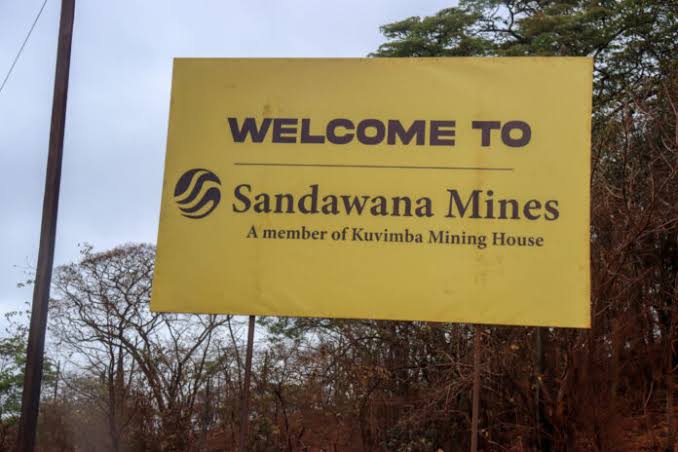
MBERENGWA— As Sandawana Mine expands its lithium operations in Mberengwa, a basic question is becoming harder to ignore: how can communities living beside the mine independently establish whether claims about environmental protection match what is happening on the ground?
The question is significant as the mine moves towards a major expansion. In July, Mutapa Energy Resources confirmed a 39.9-million-tonne lithium resource from just 30% of Sandawana’s 3,800-hectare mining claim, with the remaining 70% yet to be explored. The mine is also pursuing a large lithium concentrator project.
For villagers, the expansion brings economic promise but also renewed concerns over dust, water, blasting, land disturbance and access to resources.
A 2025 study by the Centre for Natural Resource Governance (CNRG), based on field observations and interviews with residents, reported complaints about water and air pollution, soil disturbance and cracks in houses attributed by residents to blasting. The organisation also reported concerns about possible displacement and pressure on local livelihoods. These remain allegations, rather than independently established findings.
But residents do not necessarily have to rely on photographs, personal testimony or waiting for official inspections.
Zimbabwe’s Environmental Management Act gives people a right to access environmental information and participate in environmental governance. It also requires environmental impact assessments to identify likely impacts and monitoring measures, while public consultation forms part of the assessment process. The Environmental Management Agency (EMA) is responsible for regulating and monitoring environmental impacts and reviewing EIAs.
That framework creates space for communities to become environmental observers — not as substitutes for regulators or laboratories, but as an additional source of evidence.
Zimbabwe already has a practical example. Researchers working with communities near coal-mining operations in Hwange trained residents to collect water samples and installed monitoring equipment. Over 1.5 years, community monitors and scientists collected nearly 800 samples. The research found significant changes in water quality downstream of mining activity and concluded that properly designed community monitoring can produce useful, high-quality evidence.
For Sandawana’s surrounding communities, the principle could be straightforward: establish agreed sampling points upstream and downstream of mining activity; record dates, rainfall and visible changes; test water through accredited laboratories; document dust and blasting incidents; and keep results publicly accessible.
Such monitoring would not, by itself, prove that the mine caused a particular environmental change. Laboratory quality, sampling methods, baseline data and expert interpretation matter.
But consistent community-generated evidence could give residents something stronger than anecdote when raising concerns with EMA, local authorities or the mine.
Sandawana has also begun addressing some community needs. In 2025, the company said it had spent US$475,000 on community projects, including solar-powered boreholes, with plans for 16 boreholes.
The challenge now is trust.
With Sandawana’s resource and production plans growing rapidly, independent community monitoring could provide a simple test: not whether mining should happen, but whether the environmental promises made alongside it can be measured — and verified by the people who live with the consequences.