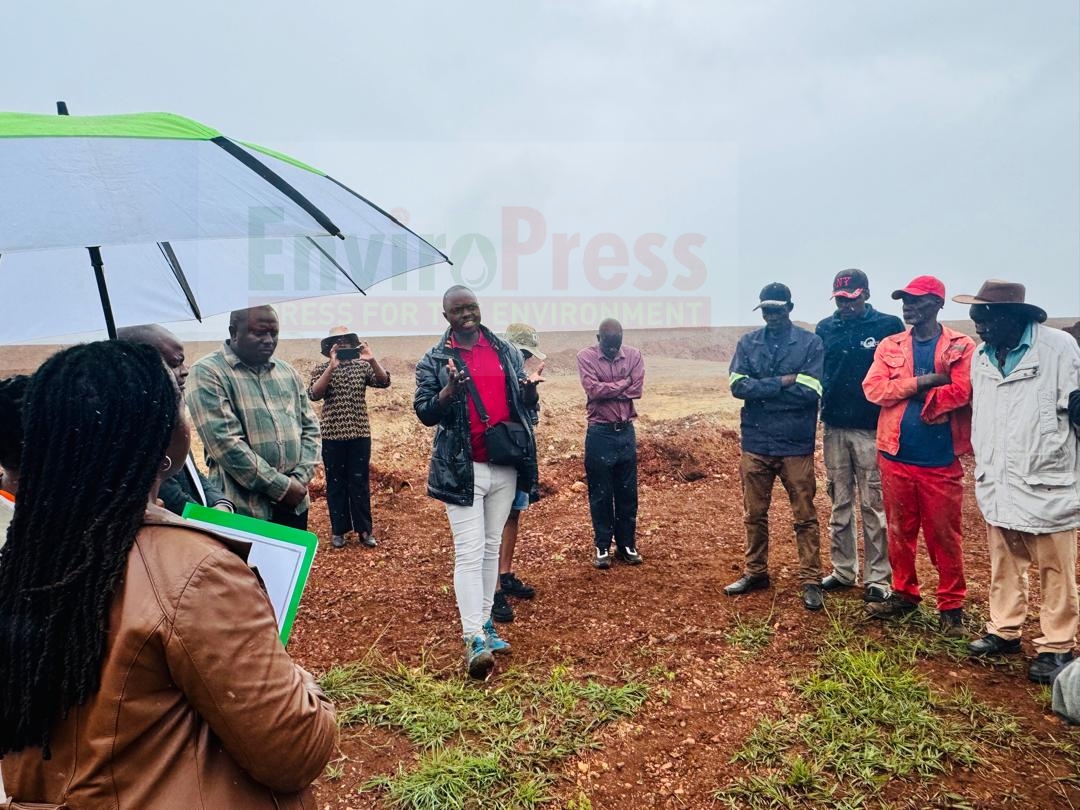
When the matter came to light, the Zimbabwe Human Rights Commissions (ZHRC) initiated an alternative dispute resolution (ADR) process to secure compensation commitment for affected villagers.
By Tawana Mutangi
In a significant development for resource-rich communities battling the effects of aggressive mining expansion, lithium mining giant Bikita Minerals has agreed to compensate and relocate nine families from Murape Village in Ward 11, whose lives and livelihoods were disrupted by the company’s nearby operations.
Under the finalized mediation agreement, Bikita Minerals committed to a specific relocation package. The mining company will pay a cash sum of USD1 500 and deliver a 20-tonne load of quarry stones to each of nine affected households, including those of community members Fanuel Chahwahwa, Kumbirai Ruvengo, and Godhelp Tinarwo.
The families agreed to completely vacate the mining claim once full cash payments and structural building materials are delivered in 2026. Chief Marozva has been tasked with overseeing the relocation logistics to ensure the displaced families are properly integrated.
The mediation sought appropriate redress for severe vulnerabilities faced by rural communities situated within Zimbabwe’s rapidly expanding lithium belt.
From 2023, EviroPress Zimbabwe documented cases of abuses suffered by villagers in communities surrounding Bikita Minerals, culminating in the commencement of investigation bv ZHRC into allegations of extensive human rights violations in Murape Village.
Read More: Bikita Minerals expansion: more families face eviction
Lithium pain: victims of evictions struggle to rebuild shattered lives
ZHRC demands urgent action on Bikita Minerals rights violations
The investigation focused on environmental rights violations, property rights infringements, threats to freedom from arbitrary eviction, and the denial of the villagers’ right to safe, clean, and potable water caused by the mine’s expanding activities.
While the human rights watchdog confirmed that the land inhabited by the families legally belonged to Bikita Minerals’ mining claim, and that government had wrongly resettled families there, it criticized the mining company for continuously operating dangerous mining procedures in immediate proximity to residential homesteads, thereby exposing vulnerable villagers to constant physical danger and ecological hazards.
Environmental advocates frequently describe such incremental degradation as ‘slow violence’, a gradual erosion of communal health, land usability, and social cohesion that is often ignored by official corporate press releases.
Following initial resistance and implementation bottlenecks from Bikita Minerals, community members approached the ZHRC for intervention. A high-powered mediation team led by ZHRC Commissioner Prof. Cowen Dziva and Masvingo Provincial Coordinator Fidelis Nyamukondiwa and Human Rights Officer facilitated a series of separate, voluntary negotiations to bridge the gap between community expectations and corporate offers.
At one of the engagements, Prof. Dziva made reference to the work done by civil society actors and the media for consistently keeping the matter under the limelight.
“It has been two years of tireless work by many actors and we finally noticed that something was indeed happening. We should continue working together until we find a solution that is acceptable to everybody. We all have a role to play,” he said.
While civil society organizations like the Zimbabwe Environmental Law Organisation (ZELO) continue to push for tighter Environmental Impact Assessment (EIA) monitoring and fairer value retention for host communities, the Murape Village settlement highlights the power of grassroots agency.
By moving past helpless victimhood to formal human rights mediation, local villagers have successfully held corporate power to account, charting a safer path forward amid the global scramble for Zimbabwe’s lithium.
This work was made possible through a partnership with the Southern Africa Trust. The views expressed herein do not necessarily represent that of the Trust or its associates. www.southernafricatrust.org