
EnviroPress Reporter
For years, Mberengwa communities have watched trucks carrying minerals leave their neighbourhoods while local businesses struggled to capture meaningful value from the mining boom.
Now, the expansion of Sandawana Mine is putting a much bigger question on the table: will small and medium enterprises (SMEs) in Mberengwa be able to supply the mine, or will the biggest contracts once again go to companies from outside the district?
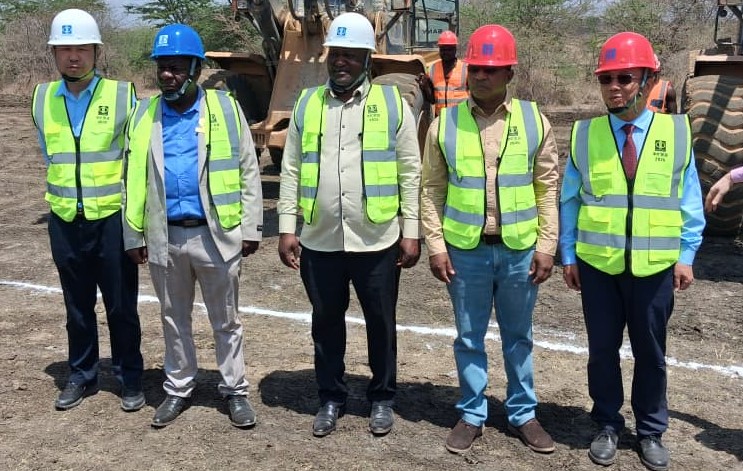
The question has become more urgent as Sandawana moves towards a major expansion. In March, Vice-President Constantino Chiwenga visited the mine as Government pushed its rural industrialisation and mineral beneficiation agenda.
The mine is developing a three-million-tonne-a-year lithium concentrator, with construction expected to run into 2027.
That investment could generate demand far beyond mining itself — from construction and transport to catering, accommodation, engineering, protective clothing, equipment maintenance and other services.
But local businesses face a difficult starting point.
Mberengwa’s economy remains heavily dependent on agriculture, livestock, retail and mining, while many businesses operate on a relatively small scale.
A district planning document notes that mining provides significant employment, including at Sandawana, but local economic activity remains dominated by small-scale enterprises and subsistence production.
Traditional leaders have already made their position clear.
At a 2023 stakeholder engagement meeting, Senator Chief Ngungumbane urged Kuvimba Mining House, which then operated Sandawana, to give preference to local suppliers for goods and services.
Where specialist services were unavailable locally, he said, procurement could then move to suppliers elsewhere in Zimbabwe.
That demand matters because Sandawana’s revival is expected to bring substantial spending into the district. The mine previously announced a US$110 million road rehabilitation programme, while its expansion has been linked to thousands of potential jobs for locals.
Yet employment is only one measure of local benefit.
The harder test will be whether a Mberengwa-owned transport company can win a haulage contract; whether local mechanics can service mine vehicles; whether farmers can supply food to mine kitchens; and whether local construction firms can participate in infrastructure projects.
The experience of the lithium rush offers a warning. In 2022, more than 5 000 artisanal miners and fortune-seekers descended on Sandawana after lithium discoveries, but the rush was followed by conflict, displacement and accusations that communities were not receiving a fair share of the resource.
There are also signs that the surrounding economy is already feeling the pressure of mining. A 2024 investigation reported safety problems associated with heavy lithium-haulage trucks on roads used by villagers.
The opportunity, therefore, is not simply for Sandawana to employ more people. It is for the mine’s expanding supply chain to create businesses that can survive beyond the life of a single contract.
Government’s current emphasis on beneficiation makes that even more important. Chiwenga has described Sandawana as part of Zimbabwe’s drive towards rural industrialisation, while the mine’s expansion is expected to increase production and processing activity locally.
For Mberengwa SMEs, the mineral wealth beneath their feet may finally offer a route into the formal mining economy.
But only if they are given a fair chance to compete — and are ready to meet the mine’s standards when that chance comes.