EnviroPress Reporter
BIKITA, Masvingo — For decades, what left the processing plant at Bikita Minerals as waste may have been carrying something more valuable than anyone realised: pollucite, a rare mineral containing cesium.
Now, under Chinese-owned Sinomine Resource Group, the mine is turning that old waste into a commercial product, raising a bigger question for Zimbabwe’s lithium boom: can mining waste really become a circular resource, or does extracting another mineral simply create a new waste problem?
Bikita Minerals, one of Zimbabwe’s oldest mining operations, sits about 80 kilometres north-east of Masvingo in the Masvingo greenstone belt. Its pegmatite deposit is classified as lithium-caesium-tantalum (LCT), and mining in the area dates back more than a century. Sinomine acquired the mine in 2022 and says it has since invested more than US$300 million in exploration and production expansion.
The caesium opportunity comes from the mine’s past.
According to a technical presentation reported by Mining Zimbabwe, Bikita historically focused on petalite, a lithium-bearing mineral. Dense-media separation left heavier material containing spodumene, lepidolite and pollucite behind. Large stockpiles accumulated because the material was not previously considered economical to process.
That calculation has changed.
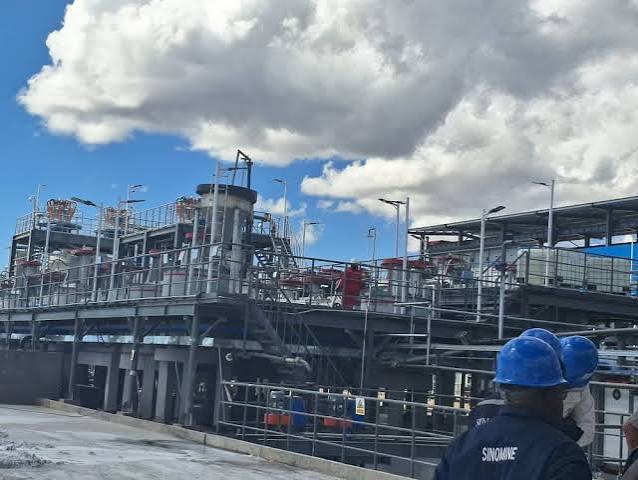
Bikita has invested about US$35 million in a cesium flotation plant designed to recover pollucite from petalite tailings. Company officials told EnviroPress that the process allows cesium-bearing material to be recovered without new hard-rock mining. The plant was undergoing commissioning in 2025.
The prize is a mineral with an unusually strategic profile. The United States Geological Survey identifies caesium as a critical mineral and notes its use in atomic clocks, while pollucite is its principal ore mineral. USGS also says Zimbabwe is among countries with identified caesium resources.
Bikita’s project therefore offers a neat circular-mining proposition: extract more value from material already mined, reduce the need for additional hard-rock extraction and potentially shrink historical waste stockpiles.
But the word “waste” remains important.
Recovering pollucite does not make the material disappear. The flotation process itself separates minerals and produces further residues that require safe handling and disposal. Bikita acknowledges that mining and processing inevitably disturb land and generate pollution, although it says its environmental management system is ISO 14001:2015 certified.
That issue matters in a district where mining expansion has already brought disputes over land and water. Recent investigations have reported concerns from residents around Murape over access to water and mining-related infrastructure, while a Zimbabwe Human Rights Commission-related response said Bikita had provided alternative boreholes and was implementing recommendations concerning affected households.
The caesium plant consequently represents both an opportunity and a test.
If Bikita can turn decades-old waste into pollucite while transparently managing the residues left by the new process, it could offer Zimbabwe a practical example of circular mineral extraction.
If not, yesterday’s waste may simply become tomorrow’s tailings.
For a mining district already being reshaped by the lithium boom, that distinction is more than semantics. It is the measure of whether “waste-to-value” is genuinely circular — or merely another chapter in the country’s long history of moving mining waste from one place to another.