
Trymore Tagwirei
Zimbabwe’s export sector remained dominated by tobacco and mineral commodities in June 2025, according to the latest trade report from the Zimbabwe National Statistics Agency (ZimStat).
However, the country’s trade deficit widened by 2.9 percent to $158.5 million, up from $154 million in May, as exports declined slightly while imports edged higher.
The trade gap expanded as exports fell 0.5 percent to $723.5 million and imports rose 0.1% to $882 million, continuing a persistent trade imbalance.
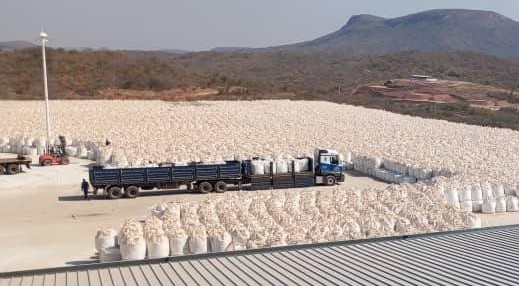
Minerals and tobacco accounted for most export earnings, with semi-manufactured gold, nickel mattes, and processed tobacco making up 53.6 percent of total exports.
Other significant exports included ferro-chromium, coal coke, industrial diamonds, and chromium ores.
Regional trade patterns showed Zimbabwe exporting mainly nickel mattes (42 percent) to SADC countries, along with coal coke (8.8 percent), gold (7.9 percent), and chromium ores (5.8 percent).
Common Market for Eastern and Southern Africa (COMESA) trade focused on iron/steel products (18.6 percent), tobacco cigarettes (18.3 percent), and coal derivatives (10.5 percent), while the EU received mostly tobacco (30.9 percent), ferro-chromium (25.9 percent), and industrial diamonds (24.3 percent).
Under AfCFTA, exports remained mineral-driven, led by nickel mattes (41.6 percent), coal coke (8.8 percent), and gold (7.8 percent).
Zimbabwe’s imports came primarily from SADC nations, with cereals (9.8 percent), machinery (9.3 percent), and plastics (8 percent) topping the list, along with fuels, electrical equipment and fertilizers.
Economists warn that while mineral and agricultural exports perform well, the growing import bill – particularly for energy, machinery, and basic goods – threatens trade stability.
They emphasize the need to develop local manufacturing, add value to raw materials, and diversify exports.
As Zimbabwe strengthens regional integration through AfCFTA, reducing import dependence and building industrial capacity will be crucial for achieving sustainable trade balances.