Trymore Tagwirei
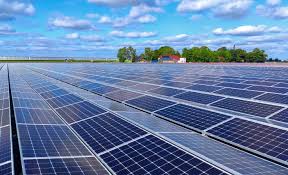
Africa’s solar revolution is gaining pace, but Zimbabwe is lagging far behind. Chinese solar exports to the continent surged 60 percent to a record 15 032 MW in the year to June 2025, yet Zimbabwe secured just 128 MW, according to Ember Energy.
China, which manufactures 80 percent of the world’s solar panels, has become the driving force behind Africa’s solar transition.
Subsidised equipment and competitive prices have allowed countries like Nigeria (1,721 MW) and Algeria (1,199 MW) to rapidly scale up imports.
Even Zimbabwe’s neighbours are forging ahead. Zambia imported 424 MW, Mozambique 344 MW, while Botswana recorded a sevenfold increase in the same period.
Despite boasting over 3 000 hours of sunshine a year and some of the continent’s highest solar irradiation levels, Zimbabwe failed to make Africa’s top 20 solar importers.
The Zimbabwe National Chamber of Commerce reports that electricity supply remains heavily dependent on traditional sources.
In the first quarter of 2025, the country generated 2 418 gigawatt hours (GWh) of power, with 69 percent from the coal-fired Hwange plant, 24 percent from Kariba South Hydro, and just 6.5 percent from independent producers, including solar.
Current supply averages 1 300–1 600 MW against a demand of 2 200 MW, leaving a 500 MW gap. Transmission losses exceeding 18 percent worsen the deficit, with load-shedding cutting business productivity by up to 40 percent.
Analysts cite multiple barriers to Zimbabwe’s solar uptake: economic instability, foreign currency shortages, and a lack of investor confidence.
While solar equipment has been duty-free since 2019, a 15 percent VAT on batteries and other key components keeps costs high. Counterfeit products have further undermined trust, while bureaucratic red tape and slow licensing of Independent Power Producers (IPPs) continue to deter investment.
Although Zimbabwe has set a target of 2 100 MW of solar capacity by 2030, progress has been sluggish.
Private companies are driving most developments. Zimplats is developing a 185 MW project, beginning with a 35 MW plant in Selous.
Caledonia Mining operates a 12.2 MW facility at Blanket Mine, while Centragrid’s 25 MW Nyabira solar farm is among the few connected to the national grid.
Smaller players, including Econet and Tanganda Tea Company, have invested in rooftop solar to cut costs and improve reliability. Altogether, Zimbabwe has only 116 MW of licensed solar projects either operational or under development — a fraction of its regional peers.