
Trymore Tagwirei
Zimbabwe is poised to make history next year with prospects of commissioning Africa’s first-ever lithium sulphate plant — a US$400 million project that is expected to produce 80 000 tonnes of lithium sulphate annually and generate approximately US$320 million in revenue.
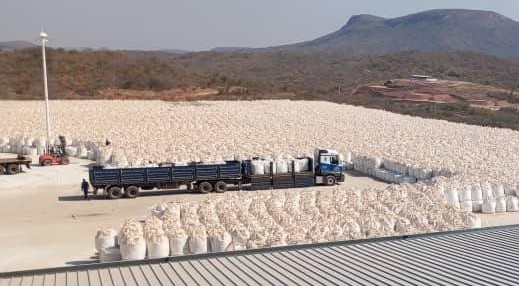
The project, spearheaded by Prospect Lithium Zimbabwe, operators of the Arcadia Lithium Mine in Goromonzi, marks a major milestone in the country’s ongoing push for mineral beneficiation, industrialisation, and job creation.
Announcing the development during a post-Cabinet media briefing recently, Information, Publicity and Broadcasting Services minister Jenfan Muswere said the state-of-the-art facility would firmly position Zimbabwe as a critical player in the global electric vehicle (EV) and battery manufacturing supply chain.
“The plant, the first of its kind in Zimbabwe and on the African continent, incorporates cutting-edge technology for lithium sulphate production.
Lithium sulphate is a key input in battery manufacturing and has several other industrial uses. The plant will also create over 1 000 jobs, boosting local employment and livelihoods,” said Muswere.
Located in Goromonzi, the facility will feature three production lines, each capable of processing 500 000 tonnes of lithium concentrate per year.
The first production line is expected to begin operations in January 2026, followed by the second and third lines in April 2026.
Once fully operational, the plant will produce 80 000 tonnes of lithium sulphate annually, significantly contributing to Zimbabwe’s industrialisation and export earnings.
Muswere said the investment aligns with the Government’s Value Addition and Beneficiation Policy, a key pillar of the national development strategy aimed at transforming Zimbabwe into an upper middle-income economy by 2030.
By processing lithium locally rather than exporting raw ore, Zimbabwe will retain greater value, create skilled jobs, and strengthen its role in the global green energy transition.
“This project will position Zimbabwe as a vital link in the global EV manufacturing chain,” Muswere added, noting that the country is moving towards producing finished products such as batteries and electric vehicles in the near future.
Meanwhile, Cabinet also approved the establishment of an Inter-Ministerial Committee on Intellectual Property, chaired by the Ministry of Justice, Legal and Parliamentary Affairs.
The committee will bring together ministries including Industry and Commerce; Higher and Tertiary Education, Innovation, Science and Technology Development; Health and Child Care; and Agriculture, among others, to coordinate intellectual property (IP) issues currently managed in a fragmented manner.
Muswere said the committee’s mandate will include advising Government on IP-related matters, ensuring compliance with international treaties, coordinating ministries and agencies to eliminate duplication, and engaging stakeholders on global IP developments.
He added that this framework will strengthen innovation, protect local inventions, and ensure Zimbabwe fully benefits from its growing industrial and technological advancements.