Trymore Tagwirei
Zimbabwe’s steel exports rose sharply in 2025, with regional markets—particularly South Africa—absorbing the majority of shipments, according to the Minerals Marketing Corporation of Zimbabwe (MMCZ).
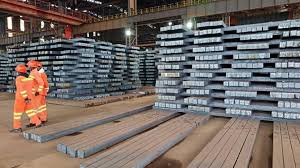
MMCZ data shows that steel exports reached US$92.1 million from 146,314 metric tonnes last year, representing a 450 percent increase in value compared to 2024. The corporation attributed the surge to strengthening demand for construction materials across Southern Africa.
“Steel exported from Zimbabwe is largely made up of long steel products such as billets, rebars and wire rods, which are exported mostly into the regional Southern Africa market,” MMCZ said.
The export growth comes amid renewed investment in Zimbabwe’s steel sector, including the development of the Manhize Steel Plant by Dinson Iron and Steel Company.
Dinson’s parent company, Tsingshan Holding Group, has announced plans to invest about US$800 million into the project. The funding will support key infrastructure and the installation of a blast furnace expected to increase production capacity from 600,000 metric tonnes of carbon steel to about 1.2 million tonnes per year.
Growing infrastructure development across Southern Africa has also supported demand for steel products, with South Africa emerging as a major export destination as construction and industrial projects expand.
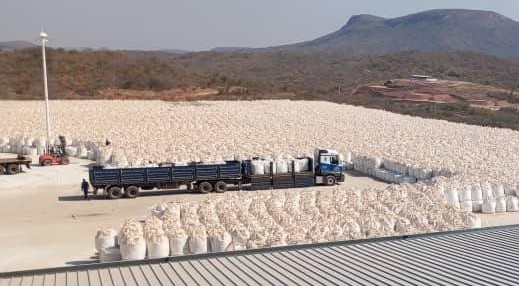
At the same time, scrap metal remains in high demand in South Africa’s manufacturing sector, particularly following the decision by ArcelorMittal South Africa to shut down its long steel business.
Zimbabwe currently accounts for about 6 percent of South Africa’s scrap metal imports. Analysts say South Africa’s persistent scrap shortages have forced steel and iron fabricators to source materials from regional suppliers to sustain production.
Zimbabwe’s steel industry had previously weakened after the collapse of the Zimbabwe Iron and Steel Company, which shut down due to corruption and operational challenges.
However, renewed investment in new projects is now helping revive the sector and position Zimbabwe as a growing regional supplier of steel products.
Meanwhile, the South African Iron and Steel Institute (SAISI) warned last year that the country was experiencing a sharp rise in steel imports, raising concerns for domestic producers.
“The implications for our domestic producers and the entire manufacturing value chain are serious. This is not simply a story of increased volumes; it is one of displacement, distortion and dumping,” SAISI said.
According to figures from the South African Revenue Service, primary steel imports into South Africa—excluding stainless steel, wire and rail—reached a record 1.56 million tonnes in 2025.
The increase was largely driven by a surge in imports of semi-finished steel products such as billets, blooms and slabs, which rose by more than 514 percent to 195,723 tonnes.
Imports of long steel products remained broadly stable, while imports of heavy and light hot-rolled sections declined by 41 percent, falling from 65,898 tonnes in 2024.
Imports of finished flat steel products also decreased by about 11 percent to 147,923 tonnes, with the steepest drop recorded in hot-rolled coil, which fell by 34 percent.
However, imports of HR strip and universal plate rose significantly, reaching a five-year peak of 28,512 tonnes, according to SAISI data.