Trymore Tagwirei
Zimbabwe’s decision to ban exports of raw minerals, including lithium concentrates, is expected to tighten global lithium supplies in the short term, although the overall impact on the market is likely to be temporary and less severe than the cobalt export restrictions previously imposed in the Democratic Republic of Congo, according to Business Monitor Index (BMI).
The export ban, announced in late February by Zimbabwe’s Ministry of Mines and Mining Development, took immediate effect. It accelerates an earlier policy timeline that had planned to restrict exports beginning in January 2027, when new lithium processing facilities were expected to be operational.
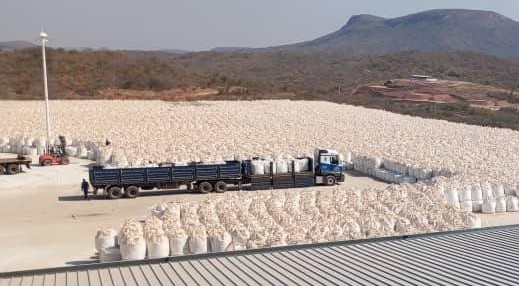
The measure forms part of Zimbabwe’s broader strategy to promote domestic value addition by requiring mining companies to process lithium locally rather than exporting concentrates, most of which have historically been shipped to China for refining.
In a report released Tuesday, BMI said the earlier-than-expected implementation of the ban—following Zimbabwe’s 2022 restrictions on the export of unprocessed lithium ores—could force producers to slow output until sufficient local processing capacity becomes available.
“By bringing forward the ban, we expect lithium miners in Zimbabwe to be left with little choice but to curb production until sufficient processing capacity is available,” BMI said.
Zimbabwe has rapidly emerged as an important lithium supplier, accounting for roughly 10 percent of global output. According to BMI, the abrupt halt in concentrate exports could tighten global supply until at least mid-to-late 2027, when additional domestic processing facilities are expected to ramp up.
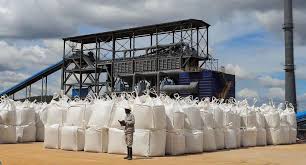
The country is preparing to commission its first lithium processing plant in the coming months. The facility, being developed by Huayou Cobalt, will process material from the company’s Arcadia Lithium Mine, which began production in 2023.
However, BMI noted that the plant’s capacity will largely be dedicated to processing output from Arcadia, leaving other producers without immediate domestic processing options. As a result, some miners lacking access to processing infrastructure may temporarily scale back operations.
Reflecting this outlook, BMI revised down its 2026 forecast for Zimbabwe’s lithium mine production to 131,100 tonnes of lithium carbonate equivalent.
Production growth is expected to resume in 2027 as additional processing facilities come online. Planned projects include lithium sulphate plants at Sinomine Resource Group’s Bikita Lithium Mine and at the Kamativi Tin Mine, developments that could help ease supply constraints and support renewed production growth.
BMI contrasted Zimbabwe’s policy with cobalt export restrictions introduced by the Democratic Republic of the Congo in February 2025, which were later modified into a quota system. Those measures had a more pronounced impact on global markets due to Congo’s dominant role in cobalt production.
“By contrast, the DRC produces around 75 percent of the world’s cobalt, meaning its export restrictions will significantly raise costs for end-users, most notably battery makers,” the report said.
Zimbabwe’s smaller share of global lithium supply means the export ban is unlikely to trigger significant downstream demand destruction. Instead, BMI believes the policy could prove more effective in encouraging domestic processing, noting that the DRC has struggled to significantly expand local beneficiation and experienced notable divestments following its cobalt restrictions.
In response to near-term supply concerns, BMI has raised its 2026 lithium price forecasts. Chinese lithium carbonate prices are now projected to average US$13 500 per tonne, while lithium hydroxide monohydrate is expected to average about US$13 000 per tonne as the market gradually rebalances after a prolonged period of oversupply.
“Supply-side swings are set to be central to the lithium market,” BMI said, adding that rapid restarts of idled capacity during a price recovery could quickly boost production, although prolonged disruptions may support a sustained price rebound.