By Moses Ziyambi
In the semi-arid stretches of the Mutirikwi and Tokwe sub-catchments, women have always been the anchors of water management, navigating drying riverbeds and distant water points to keep households running, gardens thriving, and livestock watered.
However, a recent participatory field assessment conducted by EnviroPress Zimbabwe across community and sub-basin levels revealed that while women do the heavy lifting of water for use at home and elsewhere, they are underrepresented in formal institutions that dictate how that water is governed.
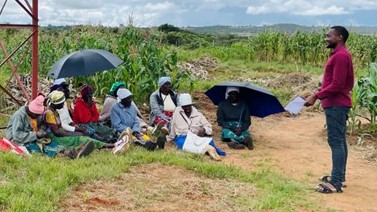
The assessment, which was carried out with support from the International Union for Conservation of Nature (IUCN), brought together ordinary villagers, traditional leaders, and water technicians.
The exercise demonstrated that systemic barriers have created a gap between the daily realities of women and their visibility in catchment and sub-catchment councils, with many participants reporting a blind spot regarding water laws and the bureaucratic inner workings of water councils.
Approximately 65 percent of the women surveyed revealed they had never received any formal training related to water management or governance.
However, the assessment noted a strong interest among younger women, particularly those aged between 25 and 40, to step into public leadership roles.
“I would like to be involved in water resource governance at any level but my knowledge of the system and processes is very limited. Since I don’t have enough knowledge of the relevant laws, I am not qualified for positions in that regard,” said Winner Chasara, a woman from Jacobsdale in the Chatsworth area under Gutu District Ward 32.
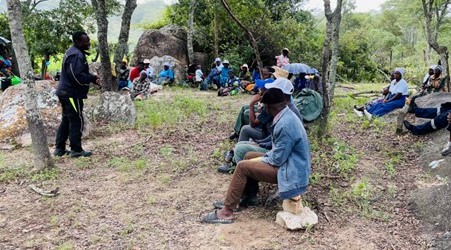
Similarly, Terrence Tsikai acknowledged the limited knowledge and leadership skills in the community, but stressed that closer coordination could improve things.
“I am committed to efforts towards inclusivity in water governance frameworks. I am an elderly man myself and may not be much interested in being at the front, but I want to see more women leaders,” said Tsikai.
During the assessment exercise, it was noticed that many women are confident when speaking within their own internal community groups or village savings clubs, but this does not necessarily result in an easy transition into broader public leadership spaces.
When asked for comment, Centre for Gender and Community Development (CGCDZ) Programmes Manager Nyararai Mudadi said the discrepancy could be partly attributed to the heavy hand of socio-cultural norms.
“In many rural settings, deep-seated expectations regarding traditional gender roles continue to dictate who should speak and who should listen,” said Mudadi, adding that some men still harbour reservations about women assuming public-facing leadership roles.
“Even when women manage to break through and take up these positions, they are often met with a lack of support from both male counterparts and peers, making their tenure in these governance spaces fragile and exhausting,” he said.
With Zimbabwe experiencing erratic rainfall and climate-induced water stress, Mudadi said, aligning local resource management with national and regional gender equality commitments should no longer be just a policy ideal, but a survival strategy.
During the consultations, traditional leaders and local authorities expressed support for inclusivity, demonstrating a strong commitment to progressive governance.