Trymore Tagwirei
The government has been urged to introduce a transparent and equitable compensation framework for communities displaced by lithium mining, with specific safeguards to protect women’s land rights.
The call follows a Gender Impact Assessment conducted by the Zimbabwe Environmental Law Organisation (ZELO), which found that women in mining-affected communities are often left without adequate compensation after losing land used for subsistence farming.
The report examined the social, economic and environmental impact of lithium mining on women involved in both large-scale and artisanal mining activities.
Researchers focused on major lithium developments in Kamativi and Insiza districts, where the Kamativi Lithium Mining Company and the Zulu Lithium Mining Company operate. The assessment also covered artisanal and small-scale mining activities in Insiza and Mberengwa.
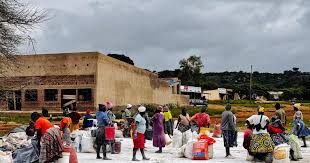
According to ZELO, although some mining companies have introduced relocation and compensation programmes to address displacement, these measures often fail to reflect the realities faced by women who depend on land for their livelihoods.
“For many women, land is their primary source of food, income and social security. When they are displaced, they lose not only their homes but also their main livelihoods,” the organisation said.
Interviews with affected communities revealed that compensation offered to displaced women frequently does not reflect the full value of the land or the broader economic and social consequences of losing it.
As a result, many women are forced to seek alternative income sources in informal or low-paying work, making it increasingly difficult for them to support their households.
ZELO said the findings point to a broader pattern of economic marginalisation, with women who lose land facing higher levels of poverty and reduced access to essential services such as education and healthcare.
The report also argues that Zimbabwe’s current legal framework tends to prioritise mining rights over land rights, leaving rural communities vulnerable when mining concessions are granted.
“Under the current legal framework, mining rights are prioritised over land rights, meaning women can be displaced without adequate compensation. Very few women hold mining claims, which limits their ability to benefit from mineral resources discovered on land they previously used for farming,” the report noted.
Nearly half of the women interviewed in artisanal mining areas said mining claims were not available to them, while about a third reported that access was only possible under limited circumstances.
The study further found that families relocated from fertile agricultural land to more arid areas have struggled to rebuild their livelihoods. Women have been particularly affected, as relocation often reduces their ability to farm productively.
In some communities, the disruption has also affected children’s education, with pupils travelling longer distances to school and, in some cases, dropping out.
The report also links environmental degradation associated with mining activities to increased burdens on women, who are typically responsible for collecting water and firewood. Deforestation and water depletion linked to mining operations have made these tasks more difficult, according to the findings.
ZELO further warned that economic pressures caused by displacement are pushing some women and girls toward risky survival strategies.
“Displacement has pushed some women and female youths towards alternative means of survival such as prostitution,” the report said.
At the same time, the organisation noted that some boys are leaving school to work in artisanal mining, attracted by the prospect of earning quick income to support their families.
ZELO said the government should establish a clear compensation framework that reflects the real value of lost land and ensures women are actively involved in negotiations over relocation and compensation.
The organisation added that such a system should align with international standards while helping restore livelihoods for communities affected by mining activities.