
Trymore Tagwirei
Premier African Minerals Limited and its strategic partner, Canmax Technologies, have agreed to extend the deadline for their amended offtake and prepayment arrangement, introducing stricter conditions that significantly tighten Canmax’s oversight of the deal.
In a trade update released yesterday, Premier said the Long Stop Date under the amended agreement had been extended from December 31, 2025, to June 30, 2026. The extension is conditional on Premier complying with revised requirements imposed by Canmax, aimed at protecting the Chinese group’s financial and strategic interests.
The extension will remain in force until June 30, 2026, or earlier if a reputable buyer acceptable to Canmax enters into a binding agreement to settle or manage Canmax’s outstanding prepayment amount, plus interest, on terms approved by Canmax.
Premier said the underlying terms of the amended agreement remain unchanged from the previously restated offtake and prepayment arrangement, except for the revised Long Stop Date and the introduction of more stringent governance and security conditions.
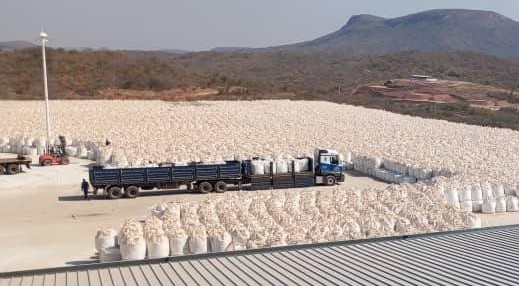
The offtake agreement relates to the supply of spodumene concentrate from Premier’s Zulu Lithium and Tantalum Project in Zimbabwe. It has been amended several times following production delays and operational challenges at the project.
Under the original structure of the deal, Canmax provided substantial upfront funding in exchange for exclusive offtake rights, a defined pricing and profit-sharing mechanism, and extensive security provisions in the event of default.
While a previous requirement for Premier to procure a non-binding expression of interest from a potential buyer within 30 days of signing the addendum has been removed, Canmax has imposed tighter governance controls. Under the revised conditions, current office bearers of both Premier African Minerals and Zulu Lithium Private Limited may not resign, be removed, or otherwise cease to hold office during the Long Stop Adjustment period without Canmax’s prior written consent.
Premier is also required to maintain all previously agreed security arrangements.
“Premier will maintain the security package previously announced on December 24, 2024, in full force and effect and will furnish any additional documentation reasonably required to preserve its validity,” the company said.
The update warned that any breach of the revised conditions could trigger immediate action by Canmax.
“To the extent that any of the above conditions, including those already in place, are not met or adhered to by Premier, Canmax will retain the right to immediately exercise all of its rights, powers and discretions under the amended agreement,” Premier said.
Premier managing director Graham Hill welcomed the extension, saying it provided clarity as work continues at the company’s flagship lithium asset.
“We are grateful for Canmax’s continued support and collaboration and the revised long stop date provides welcome clarity as we work together towards a successful outcome at Zulu,” Hill said.
The partnership between Premier and Canmax dates back to August 2022, when the two parties entered into a prepayment and offtake agreement valued at approximately US$34.7 million. Under that deal, Canmax agreed to fund the construction and commissioning of the Zulu Lithium and Tantalum Project in return for exclusive offtake rights.
However, commissioning delays and plant performance challenges in 2023 strained the relationship, prompting Canmax to issue notices of default. After prolonged negotiations, the parties reached a settlement and restructuring agreement in December 2024, which included provisions allowing Canmax to convert accrued interest into equity.
The latest addendum is viewed as a critical step towards stabilising the partnership. It reaffirms Canmax’s commitment to the project while granting Premier additional time and financial flexibility to optimise plant performance and progress towards sustained commercial production.
Located near Fort Rixon in Matabeleland South Province, the Zulu Lithium Project is regarded as a potential game-changer for Zimbabwe’s lithium ambitions, positioning the country to benefit from rising global demand for battery minerals driven by the clean energy transition.