Trymore Tagwirei
Zimbabwe’s rivers and lakes are choking under rising pollution despite the existence of progressive laws meant to protect them, a new report by the Combined Harare Residents Association (CHRA) has revealed.
The policy brief, titled “Enhancing Civic Participation in Local Governance: Legal, Policy, and Regulation Frameworks on Water Governance and Pollution Control,” exposes the widening gap between Zimbabwe’s water policies and their implementation.
According to the report, while the country boasts robust legislation—including the Constitution, the Water Act, the Environmental Management Act, and the National Water Policy of 2013—enforcement remains weak.
Poor coordination among the Zimbabwe National Water Authority (ZINWA), the Environmental Management Agency (EMA), and local authorities has rendered these measures largely ineffective.
Despite the government’s ratification of two major UN conventions on transboundary water management in 2024, pollution remains rampant in key water sources such as Lake Chivero and the Manyame River.
In December 2024, authorities imposed an indefinite fishing ban at Lake Chivero following mass fish deaths linked to toxic industrial effluent discharges.
Laboratory tests conducted by CHRA at nine pollution hotspots, including Kambuzuma, Crowborough, and Manyame, revealed manganese levels up to nine times above acceptable limits and dangerously high phosphate concentrations—posing serious risks to human health and aquatic life.
CHRA programmes manager Reuben Akili said the findings show that Zimbabwe’s water governance system is in deep crisis.
“We have strong laws on paper, but implementation is almost non-existent. EMA continues to issue discharge permits and collect fees from polluters without reinvesting those funds into cleanup or prevention. Essentially, the polluter pays and pollution stays,” said Akili.
He added that residents are bearing the brunt of this failure through contaminated boreholes and rising water treatment costs.
“Communities are being forced to drink unsafe water because both local authorities and regulators are failing to act decisively. Access to clean water is a constitutional right, yet it remains a privilege for a few,” said Akili.
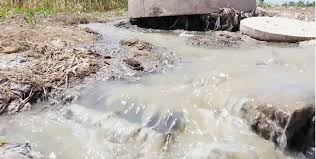
He noted that water in Manyame River remains visibly green due to cyanobacteria, endangering both people and livestock.
“The locals are losing their animals and crops, and their livelihoods have been destroyed since the fishing ban. We’re calling on both the City of Harare and Chitungwiza Municipality to refurbish their sewage treatment plants to stop discharging raw sewage into the river,” he said.
According to CHRA, Chitungwiza releases an estimated 20 megalitres of untreated sewage daily into the Manyame River, while Harare discharges between 40 and 50 megalitres into Lake Chivero, the capital’s main water source.
Harare Mayor Jacob Mafume recently said the city is working to upgrade sewage plants and improve chemical treatment.
“We have entered into a Memorandum of Understanding with other partners so that we can modernise our plants and avoid discharging sewage into rivers,” he said.
Harare Metropolitan Residents Forum chairperson Marvelous Khumalo emphasized the need for greater community participation in water governance.
“Residents must be equipped with knowledge and tools to play an active role in monitoring water pollution. Protecting our water sources starts with civic participation,” Khumalo said.
The policy brief calls for the establishment of a single independent water regulator, stricter enforcement of pollution laws, and the harmonisation of overlapping statutes.
It also recommends that revenue collected under the “polluter pays” principle be directed exclusively towards environmental restoration rather than general government coffers.