Tiyani Hahlani
Masvingo says it is on track to become one of Zimbabwe’s first cities to produce commercial bio-methane gas, a renewable energy source expected to power thousands of households and reduce dependence on liquefied petroleum gas (LPG) and the national electricity grid.
The project, a partnership between the City of Masvingo and the Zimbabwe Open University (ZOU), is scheduled for commissioning in September 2026.
Since its inception in June 2024, the initiative has recorded significant progress. The city’s 2 174-cubic-metre digester has been fully customised, while lab-scale digesters are already producing experimental quantities of biogas.
Read More: Masvingo to produce cooking gas from sewage
Major purification equipment is nearing completion, and several strategic gas vending points across the city have been identified to support future distribution.
According to a report obtained by EnviroPress and produced by Dr. Kaitano Dzinavatonga of ZOU’s Faculty of Science, who is leading the research and system integration, the project is steadily advancing toward full implementation.
“We are finalising the main plant shed and integrating all systems. Once operational, Masvingo will have a low-carbon, renewable energy source available for both households and industries,” Dr. Dzinavatonga said.
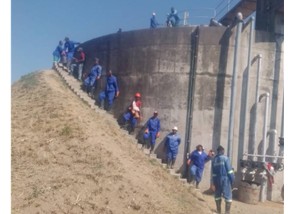
The project team has also prioritised worker safety, with protective gear — including branded overalls, trench coats and safety shoes — already distributed.
Equipment testing and product quality verification are expected to begin in early 2026, paving the way for the city’s official bio-methane launch later that year.
Beyond providing a clean and affordable energy alternative, the project aligns with Masvingo’s climate-smart goals and supports Zimbabwe’s Vision 2030 for sustainable development.
Once commissioned, the bio-methane plant is expected to make Masvingo a pioneer in renewable energy innovation, setting a model for other urban centres seeking green, locally sourced power solutions.