Trymore Tagwirei
The Centre for Gender and Community Development in Zimbabwe (CGCDZ), a community-based organization in Masvingo, has trained over 30 rural farmers in producing and using Bokashi—an organic bio-fertilizer designed to boost soil fertility and reduce dependence on costly synthetic inputs.
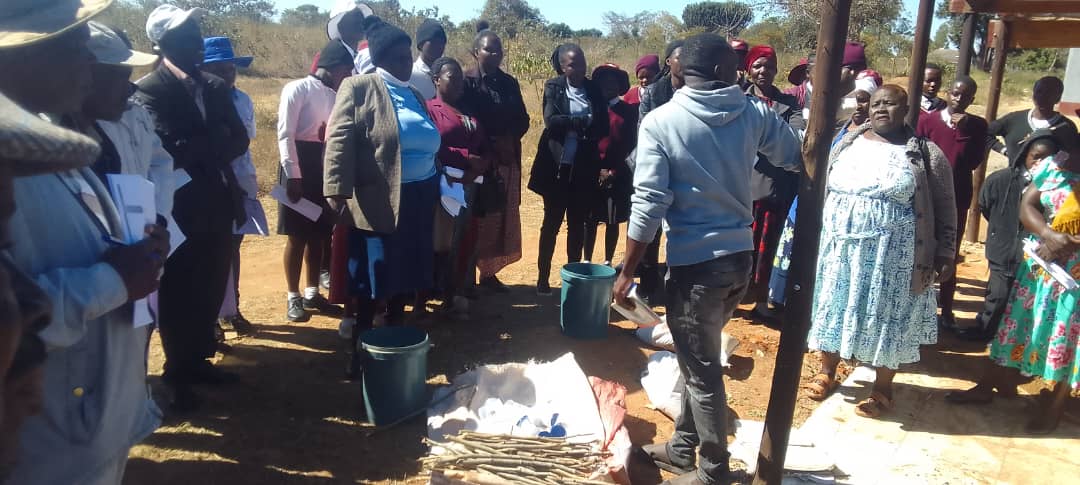
The training, held last week at Ray of Hope Academy, drew smallholder farmers from Nemamwa, Sipambi, Charumbira and Sikato. CGCDZ officials emphasized that the initiative promotes climate-smart, low-cost farming practices district-wide.
CGCDZ programmes officer Kudzanai Maruma, explained Bokashi’s ecological advantage saying it reactivates the soil’s natural biological processes.
“Unlike synthetic fertilizers, Bokashi revitalizes the soil by reintroducing microbes, minerals and organic matter. This reactivates natural biological processes, leading to healthier soil that eventually requires no external treatment,” said Maruma.
Since 2018, CGCDZ has trained over 180 smallholder farmers across Masvingo in Bokashi production.
Monica Marivadze, a farmer from Chinyika, Gutu, who attended an earlier session, attested to Bokashi’s benefits.
“Bokashi outperforms compost significantly. My maize grows faster, looks healthier and tastes better,” said Marivadze.
Ward 10 councillor Junior Charumbira, who attended, urged fellow leaders and farmers to apply the lessons learned.
“Today was highly informative. I encourage all local leaders to collaborate and implement what we have learnt, building Boma kraals and making Bokashi fertilizer using locally available resources, with minimal expense,” said Charumbira.
Key Bokashi ingredients include cereal husks, livestock manure, clay-rich soil, wheat bran, molasses, rock dust or ash, chlorine-free water and yeast.
With ongoing CGCDZ support, more farmers are expected to adopt Bokashi and similar sustainable methods, reducing reliance on synthetic fertilizers and enhancing long-term soil health.