Trymore Tagwirei
As the world prepares for COP30 in Belém, Brazil, a new ActionAid report has revealed that less than three percent of global climate finance supports “just transition” initiatives — approaches designed to ensure that workers, women, and frontline communities are not left behind in the shift to a greener economy.
The report, Climate Finance for Just Transition: How the Finance Flows, analyzed funding from two major global climate funds — the Green Climate Fund and the Climate Investment Funds — and found that just 2.8 percent of total climate finance goes toward projects prioritizing people’s rights and livelihoods.
Even more striking, only one in 50 projects (1.96 percent) adequately engages communities in planning and implementation. And for every 35 dollars spent on climate action, just one dollar supports a just transition.
ActionAid warns that this lack of investment leaves communities on the frontlines of the climate crisis exposed to economic loss and social harm. The organization emphasizes that while transitioning away from fossil fuels and industrial agriculture is vital, it must be done in a way that protects jobs, strengthens rights, and makes food and energy more affordable.
“The world urgently needs action to prevent climate breakdown, but it should be the polluters — not workers and communities — who pay the price,” said Arthur Larok, Secretary General of ActionAid International.
“Our new report shows that just transition approaches are jaw-droppingly underfunded, and people’s needs are at the bottom of the priority list. If this continues, inequalities will only deepen.”
Teresa Anderson, the report’s author and ActionAid’s Global Lead on Climate Justice, added:
“No one should have to choose between a secure job and a safe planet.
Just transition approaches ensure climate action prioritizes people’s daily needs and doesn’t push them deeper into poverty. Without this focus, climate action risks causing harm, backlash, and further delays.”
The report highlights both harm and resilience across communities in the Global South, where industrial agriculture and fossil fuel companies continue to threaten livelihoods and ecosystems.
In Maranhão, part of Brazil’s Legal Amazon region, communities that have long depended on harvesting babassu coconuts — used in food, cosmetics, and industry — are facing intimidation and displacement due to expanding industrial agriculture.
Jessica Siviero, Climate Justice Specialist at ActionAid Brazil, said the Amazon acts as the lungs of the Earth, while the Cerrado serves as its veins.
“With COP30 in Belém, global attention is finally turning to how industrial agriculture is destroying these vital ecosystems. The world must move away from harmful practices and embrace agroecology — a model that feeds people and cools the planet. Agriculture, too, needs a just transition,” she said.
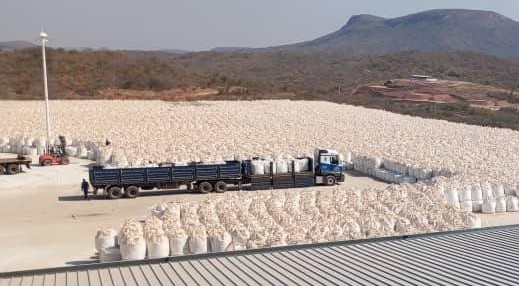
In Zimbabwe, similar injustices are unfolding. Families are being forced to leave their communal and ancestral lands to make way for Chinese investors mining lithium — such as at Bonita Minerals in Masvingo Province. In Murape village, residents report serious abuses from Chinese miners who are evicting them without compensation. Water points have been fenced off within the mine site, cutting off access to clean water for both people and livestock.
With just one week until COP30 begins, ActionAid and its allies are urging world leaders to commit to a coordinated global plan for just transition funding. The organization is calling for the creation of a “Belém Action Mechanism” — a framework for coordination, shared learning, and practical implementation of just transition principles across sectors.
“This is a critical opportunity for global climate action to evolve for the better. COP30 must deliver a global plan that reassures those on the frontlines and helps unleash the action our planet so urgently needs,” Anderson said.
ActionAid is a global federation working with more than 41 million people in over 71 countries — including some of the world’s poorest. The organization strives for a just, fair, and sustainable world where everyone enjoys dignity and freedom from poverty and oppression. Its mission includes promoting social justice, gender equality, and the redistribution of power to local organizations and movements.