
Trymore Tagwirei
Zimbabwe’s sovereign wealth fund, the Mutapa Investment Fund (MIF), says its mining flagship, Kuvimba Mining House (KMH), requires about US$950 million to scale up operations across gold, lithium, platinum and chrome assets, as it intensifies growth, improves efficiency and expands its resource base.
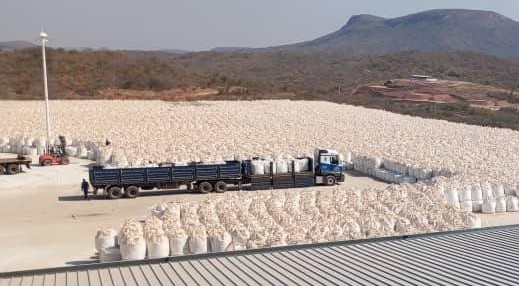
In its annual report and first set of audited financial statements released last week, MIF said the funding will be channelled towards mine expansions, exploration programmes and critical infrastructure development across KMH’s four operating clusters – gold, energy minerals, platinum group of metals (PGMs) and bulk commodities.
“KMH will continue with exploration campaigns, with a dual focus on identifying new deposits and extending the life of existing mines, while advancing several capital projects already in the development pipeline,” reads the report.
As part of its long-term operational strategy, KMH is also prioritising energy security, amid persistent power challenges affecting the mining sector.
“The company is exploring alternative energy solutions, including solar power, to improve energy security and operational resilience,” MIF said, signalling a gradual shift towards cleaner and more reliable energy sources.
Within a volatile global minerals market, MIF said its Mineral Resources Cluster – which includes Kuvimba Mining House, Defold Mine, Hwange Colliery Company Limited (HCCL) and Tuli Coal – operated in a challenging but opportunity-rich environment.
Gold played a stabilising role across KMH’s portfolio. Zimbabwe recorded a record national gold output of 36.48 tonnes in 2024, a 21 percent increase over the prior year, with KMH’s Gold Cluster contributing about 3.2 tonnes to Fidelity Gold Refinery deliveries.
For the financial year ended March 31, 2025, KMH increased gold production to 3,61 tonnes, representing an 11 percent year-on-year growth, driven by mine expansions, optimisation of existing operations and improved operational discipline.
Beyond KMH, the broader mineral resources portfolio posted solid gains. The Zimbabwe Consolidated Diamond Company (ZCDC), operating under Defold Mine Holdings, recorded a 12.5 percent increase in diamond output and a 32.8 percent rise in diamond sales.
Kamativi Tin Mines marked a major milestone after commencing lithium production through its investment in Kamativi Mining Company, which successfully commissioned phases one and two of its lithium processing plants. The Fund said the company also progressed its non-standard tribute arrangement with Bravura, with shipments of plant components underway and site preparations for civil works ahead of commissioning targeted for 2026.
Hwange Colliery Company Limited remained under judicial management throughout the year but showed early signs of recovery, supported by rising domestic and regional demand for thermal and coking coal.
However, performance in the Energy Minerals cluster was mixed after the collapse in global lithium prices negatively affected production levels and revenues. Despite this, KMH continued negotiations to establish a consortium-based special purpose vehicle to develop and process lithium at Sandawana Block A.
“The build-operate-transfer agreement, expected to reach financial close in 2026, will position KMH to benefit from the anticipated recovery and longer-term structural demand for lithium,” MIF said.
Bindura Nickel Corporation remained under administration, constrained by persistently low nickel prices and legacy operational challenges that continue to undermine cash flow generation.
The Bulk Commodities cluster faced logistical and cost pressures due to rising global shipping rates, which reduced the competitiveness of Zimbabwean exports. Zimbabwe Alloys recorded constrained output owing to inconsistent feed supply and recurring power outages.
In the Platinum Group of Metals cluster, the Darwendale project remained under care and maintenance as KMH continued engagements with potential investors and funding partners to revive the project.
MIF said that although demand forecasts vary across minerals, its diversified asset base provides a buffer against commodity price volatility.
“The Fund’s diversified asset base provides a natural hedge against commodity-specific volatility,” reads the report.
It added that the operationalisation of the African Continental Free Trade Area (AfCFTA) is expected to unlock new growth opportunities, particularly for battery minerals and steel inputs.
“AfCFTA is expected to broaden regional markets for battery minerals, steel inputs and other commodities, offering new avenues for export growth,” MIF said.
Strategically, the Fund said it will continue prioritising operational excellence, cost discipline and portfolio optimisation, including advancing exploration, modernising processing infrastructure, scaling viable assets and assessing underperforming operations for potential divestment.
MIF also pledged to deepen its focus on environmental, social and governance (ESG) integration.
“This includes safety improvements, environmental stewardship and community engagement to ensure sustainability and long-term competitiveness of the mining portfolio,” it said.
Overall, the Fund said the Mineral Resources Cluster demonstrated resilience and strategic clarity amid a volatile global environment, positioning it to create long-term national value and reinforce Zimbabwe’s role as a significant mineral producer in regional and global markets.