
Trymore Tagwirei
Zimbabwe’s external trade position improved markedly in 2025, with the country’s trade deficit narrowing to US$404 million from US$1,79 billion in 2024, according to the latest data released by the Zimbabwe National Statistics Agency (ZimStat).
The improvement represents a significant correction in the trade balance and was driven by stronger export earnings, firmer global commodity prices and a decline in imports, partly reflecting improved domestic production.
In its external trade statistics report, ZimStat said the narrowing of the deficit was underpinned by increased mining exports and positive spillover effects from the recovery in agriculture.
“The country’s trade balance improved markedly in 2025, with the deficit narrowing to US$404 million compared to US$1,79 billion recorded in 2024,” ZimStat said.
Gold remained the country’s largest export throughout the year, supported by higher deliveries and sustained strength in international prices.
ZimStat data shows that semi-manufactured gold consistently accounted for the largest share of total exports, reinforcing the mining sector’s central role in foreign currency generation.
On an annual basis, gold exports generated more than US$4,5 billion in receipts, underpinned by production growth and favourable global prices, driven by geopolitical uncertainty and increased demand from central banks.
“Gold continued to dominate export earnings, contributing the largest share of total exports in 2025,” ZimStat noted.
The strong performance of the yellow metal helped offset volatility in other export sectors and supported improved external liquidity.
Tobacco emerged as the second-largest export earner, contributing more than US$1,3 billion in export receipts during the year.
The crop benefited from improved prices and steady demand at both auction and contract floors.
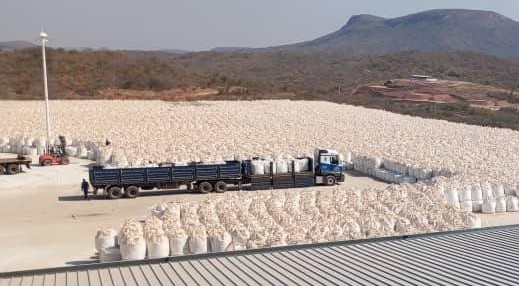
Other mineral exports also made a notable contribution to overall export earnings.
Platinum group metals, nickel mattes and ferro-alloys collectively generated more than US$900 million, reflecting stable production levels and firmer global commodity prices.
ZimStat noted that export values strengthened even in months when volume growth was modest, highlighting the role of improved pricing conditions across Zimbabwe’s key commodity exports.
The broader recovery in global commodity prices during 2025 further reinforced export performance, with stronger prices for metals and agricultural products improving unit export values.
This helped ease pressure on the balance of payments and provided a buffer against external shocks.
Higher export earnings translated into increased foreign currency inflows and improved current-account dynamics, strengthening Zimbabwe’s external position at a time when authorities are seeking to sustain foreign currency reserve stability and support the gold-backed Zimbabwe Gold (ZiG) currency introduced in April 2024.
On the import side, a major adjustment came from a sharp decline in food imports, particularly maize, following a successful 2024/2025 summer cropping season that produced an estimated 2,2 million tonnes of maize, significantly reducing reliance on imports.