
Trymore Tagwirei
The Grain Marketing Board (GMB) has introduced a new grain trading and storage framework aimed at strengthening agricultural value chains, widening market access for farmers and enhancing national food security.
In a statement released this week, the parastatal said 89 depots and 1 804 grain buying points across the country will participate in a third-party grain purchasing and storage system.
Under the new model, GMB facilities will handle grain on behalf of farmers, millers, stockfeed manufacturers and other processors. Companies seeking to purchase grain will be required to register with the board, agree on a price per tonne and deposit funds into a GMB account.
Grain held by the board will serve as collateral for each transaction, a mechanism intended to provide security for both producers and buyers.
According to GMB, the framework is designed to guarantee processors reliable access to quality grain while creating affordable and efficient market channels for farmers.
“The model assists farmers to access markets at low cost while benefiting processors through GMB’s aggregation. Once payment has been processed, buyers will be able to collect prepaid grain from their nearest GMB depot,” the board said.
The system is expected to reduce transport costs and improve supply efficiency nationwide.
The initiative also places emphasis on rural development, with women, youth, Village Business Units (VBUs) and Small Business Units (SBUs) expected to play a role in grain aggregation.
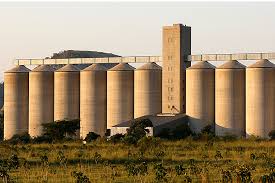
Alongside the trading reforms, GMB announced plans to expand its storage infrastructure. The board currently operates silo facilities with a holding capacity of 862 000 metric tonnes, while an additional 672 000 metric tonnes is under construction.
Upon completion, total storage capacity under GMB will exceed 1,5 million metric tonnes.
To encourage greater utilisation of its facilities, the board has reduced storage fees to US$2,90 per metric tonne per month.
GMB said the expanded storage network is expected to help farmers minimise post-harvest losses and enable regional and international traders to store grain under collateral management arrangements.
The board described the combined trade and storage reforms as a step towards improving efficiency in the agricultural sector and strengthening Zimbabwe’s position in regional grain markets.