Tiyani Hahlani
Just a few seasons ago, Tanaka Chitumbura spent her days toiling near the banks of Mutunha Dam, battling harsh weather and the constant fear of eviction.
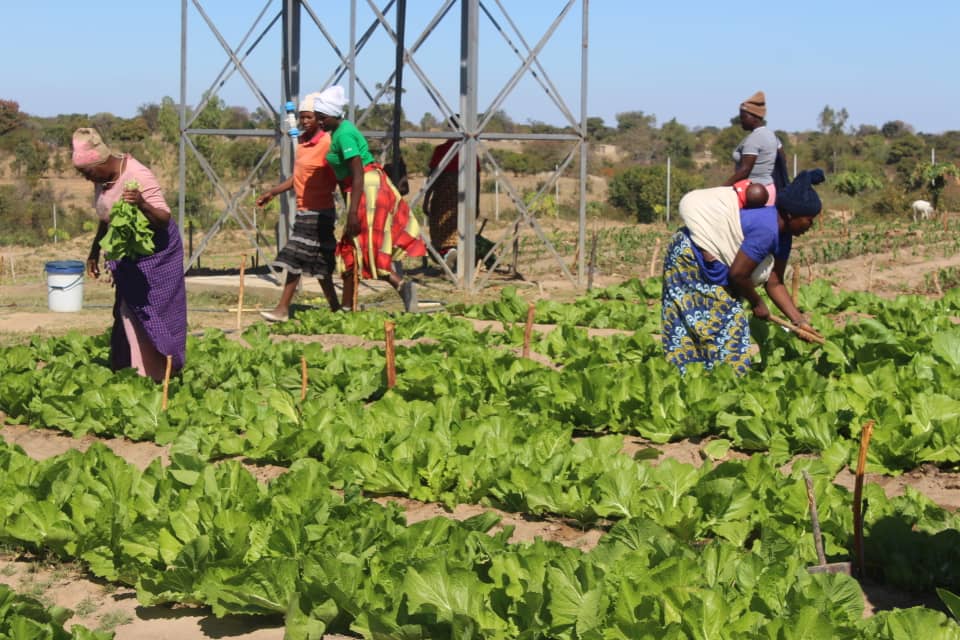
Today, she walks proudly through neat rows of lush green vegetables and beans under the midday sun in Zivei Garden, Ward 15—no longer just surviving, but thriving as a successful farmer.
“I used to rely on food handouts,” Chitumbura recalls, her smile as wide as her flourishing garden.
“Now, I grow enough to feed my family and even sell the surplus. With the profits, I bought a goat. For the first time, I feel in control of my life,” she said.
Chitumbura is one of many women at the heart of a transformative initiative in Buhera’s Ward 15. Led by SAFIRE (Southern Alliance for Indigenous Resources) in partnership with Oxfam and SIDA (Swedish International Development Agency), the Climate Adaptation for Rural Livelihoods (CARL) project is reshaping not only farming practices but also the economic future of the community.
Where destructive riverbank cultivation once endangered both the environment and livelihoods, solar-powered irrigation systems now sustain thriving gardens, enabling year-round crop production.
This innovation has been a game-changer, helping 134 households transition from vulnerable, unsustainable farming to resilient, profitable agriculture.
SAFIRE Director Estella Toperesu, speaking during a recent media tour, emphasized the project’s dual focus: climate resilience and economic empowerment.
“We are promoting sustainable natural resource management. Streambank farming was putting the community at risk, so we collaborated with government agencies to shift farmers toward more productive, climate-smart practices—and equipped them with the tools to succeed,” said Toperesu.
The initiative prioritizes women and youth, groups often excluded from rural economic planning.
Hyne Murwisi, a local agriculture extension officer, has witnessed the project’s impact firsthand.
“These gardens are a lifeline. Farmers now grow crops year-round, incomes are rising, and environmental damage is being reversed. Most importantly, women and youth have equal opportunities to build better lives,” said Murwisi.
Zivei Garden stands as a testament to what’s possible when resources, knowledge, and determination converge.
Under the sun, crops flourish—nourished not just by water, but by the resilience of a community that refused to be defined by drought or poverty.
In a world struggling with climate change, Buhera’s story offers hope—a powerful reminder that the solutions we seek may lie in the hands of those too often overlooked.