EnviroPress Reporter
Just a year ago, the land now occupied by the thriving Pikinini Jawanda Irrigation Scheme was a wild thicket—a hunting ground where locals foraged for rabbits and birds to feed their families. Today, that very ground has been transformed into a beacon of climate-proof, self-sustaining agriculture.
The vision for an irrigation scheme dates back to 1985, shortly after the construction of Manyuchi Dam. Yet for nearly four decades, it remained a distant dream due to limited resources and competing community needs.
That dream only began to take shape when the Government of Zimbabwe, in partnership with the Green Climate Fund (GCF) and the United Nations Development Programme (UNDP), launched the Climate Resilient Livelihoods (CRL) Project.
With an investment of nearly USD 1.1 million, the project developed a 156-hectare irrigation scheme—roughly equivalent to 230 soccer fields. A standout feature of this effort is the floating pontoon abstraction system installed in the Manyuchi River. Unlike fixed-pump systems, this innovative raft-mounted infrastructure adjusts with water levels, ensuring a steady supply even during dry spells.
Water efficiency is at the heart of Pikinini Jawanda’s operations. Replacing wasteful flood irrigation, the scheme employs centre pivot systems across 40 percent of the land and semi-portable sprinklers on the rest—conserving water while boosting productivity. Supporting infrastructure includes a switch room, a 1 km power main line, and over 9 000 metres of irrigation piping, laying a strong foundation for long-term sustainability.
However, the scheme’s success is not just in its infrastructure—it’s in the people.
“We were not going to just sit and wait for the project to do everything for us,” said Chizivano Shava, Chairperson of the Irrigation Management Committee (IMC). “Even before the equipment arrived, we began clearing the land ourselves.”
Each of the 300 beneficiary farmers contributed up to 45 days of labour, a collective input valued at approximately USD 54 000, according to Zimbabwe’s National Employment Council Agriculture Rates. The community also took charge of fencing, securing half of the required 6.3 km and temporarily patching the rest with tree branches to kickstart production.
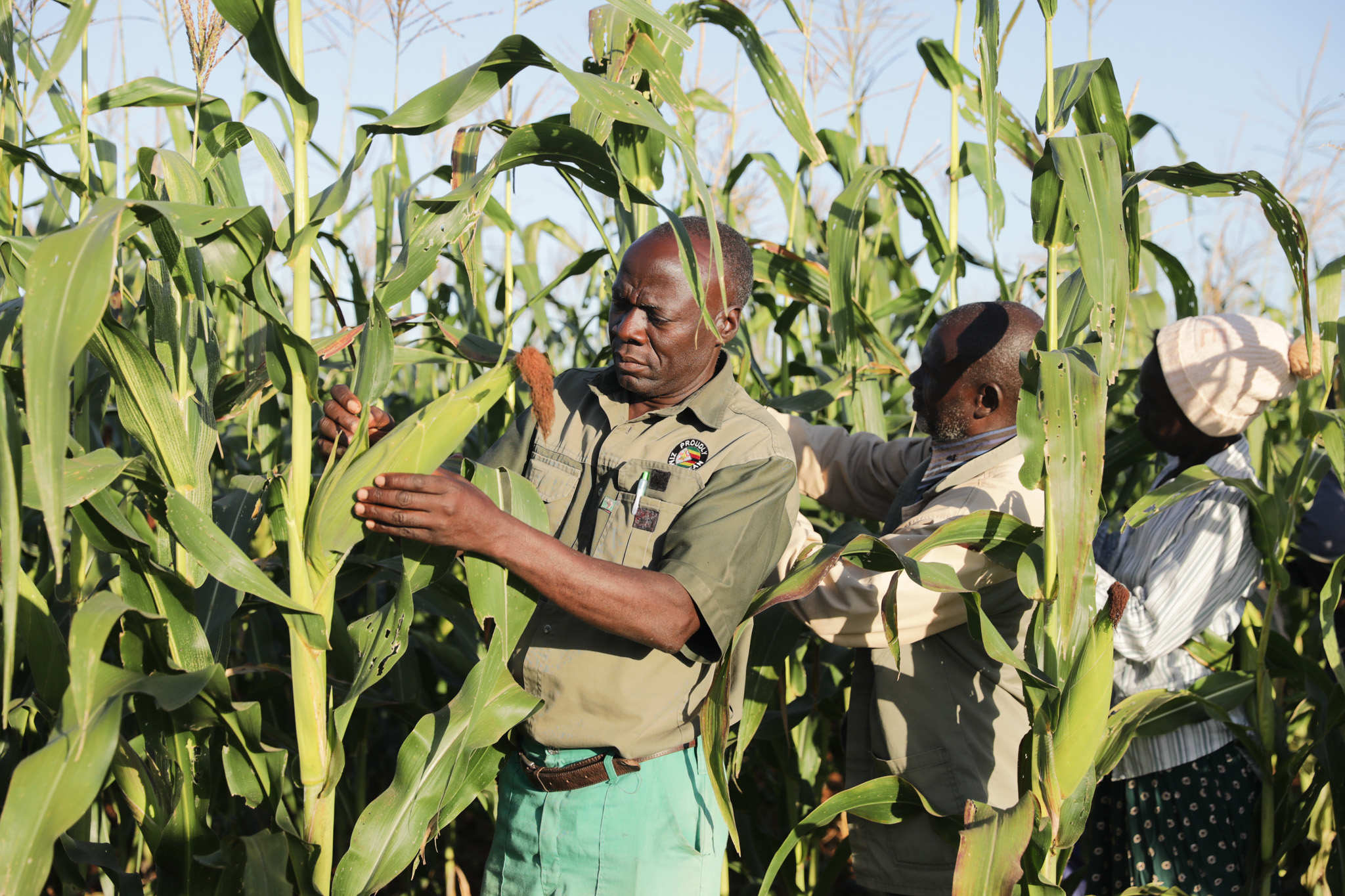
Guided by Agricultural Extension Officer Jonah Bukuvani, the once-barren landscape now thrives with crops like maize, sugar beans, and other high-value produce. Nearly 50 percent of the scheme is under active cultivation. From an initial harvest, farmers produced 19 tonnes of grain for home use and earned close to USD 4 000 from market sales—earnings that have been reinvested into the project.
The scheme has secured a contract with a private seed company to produce sugar bean seed, providing a guaranteed market and further financial security. Bukuvani attributes the scheme’s smooth operations to inclusive decision-making.
“Pikinini Jawanda beneficiaries are easy to work with because there is inclusive planning and public endorsement of all decisions,” he said. “This has helped us avoid conflict.”
The CRL Project also equipped farmers with crucial skills through training in leadership, governance, water management, financial literacy, and farming as a business—ensuring that the community has the knowledge to manage the scheme effectively.
Looking forward, sustainability remains a priority. To reduce dependency on individual contributions, the IMC has allocated five hectares for crops specifically meant to finance operations and maintenance. Security is managed through a gender-sensitive rotation system—women guard during the day and men at night, keeping crops and equipment safe.
During a recent visit, Professor Obert Jiri, Permanent Secretary in the Ministry of Lands, Agriculture, Fisheries, Water and Rural Development, praised the community’s commitment.
“The progress at Pikinini Jawanda is commendable, especially the community’s ownership and dedication. But to grow into a viable agribusiness, the farmers need to continue on this path,” he said.
From a forgotten thicket to a flourishing agricultural enterprise, Pikinini Jawanda stands as a testament to what can be achieved through community-driven resilience, innovation, and partnership.