Tiyani Hahlani
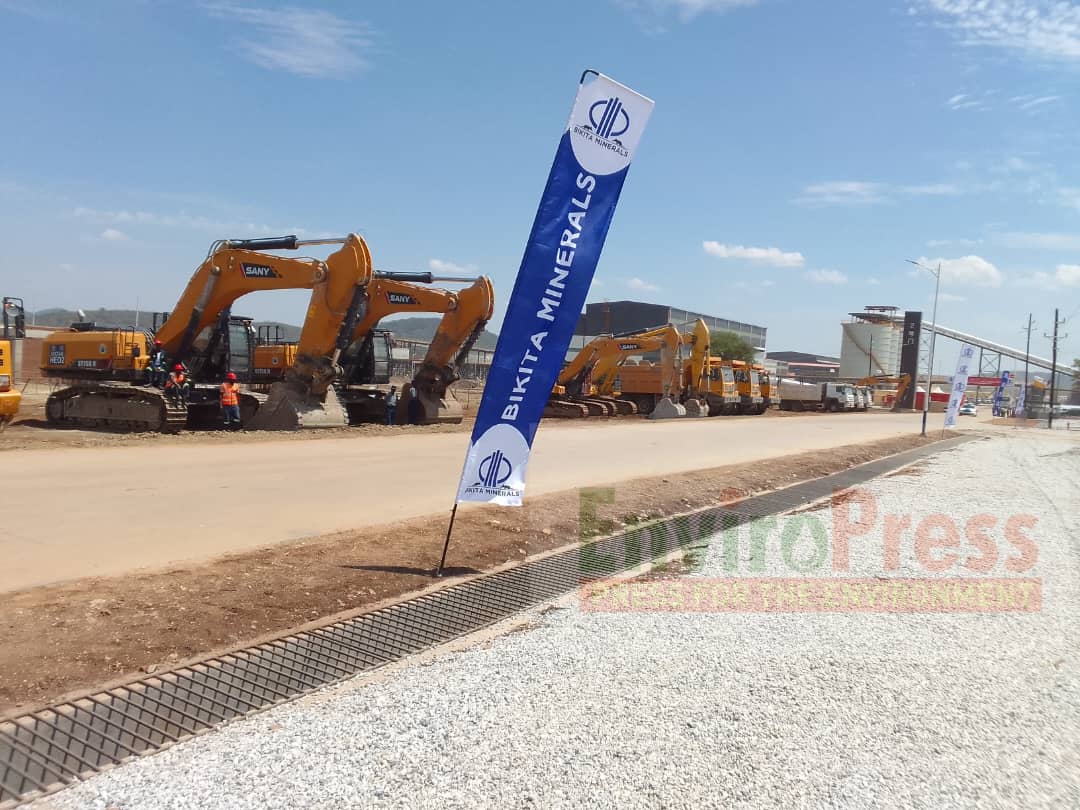
Masvingo province has in recent year played an important role in Zimbabwe’s ambition to become a top lithium producer globally, with Bikita Minerals being one of the most notable party to the transformation.
As global demand for battery minerals accelerates under the energy transition, Zimbabwe has consolidated its position as Africa’s largest lithium producer.
According to the Africa Energy Chamber’s State of African Energy 2026 Outlook Report, the country is forecast to extend its lead as Africa’s lithium output by the end of the decade.
At the centre of this growth are many mining companies including Bikita Minerals, located in Masvingo, whose expansion since 2022 has been enormous.
Bikita Minerals is one of the world’s longest-running lithium mines, with a history stretching back decades. In recent years, however, the operation has undergone a dramatic transformation following significant Chinese investment, turning it into a modern, high-output mine with global relevance.
The report notes that in 2024 alone, Bikita Minerals produced more than 58 000 tonnes of lithium carbonate equivalent (LCE), placing it among the top 10 lithium-producing mines worldwide.
It underscores the mine’s global standing, noting that Zimbabwe hosts two of the world’s top 10 lithium-producing projects — Bikita Minerals in Masvingo and the Arcadia Lithium Project near Harare, both operated by Chinese companies.
“Zimbabwe featured prominently in the global lithium production landscape, with two of the top 10 lithium-producing projects located in the country,” the report states.
While Arcadia has drawn international attention due to its proximity to the capital, Bikita Minerals remains the backbone of Zimbabwe’s lithium industry. Its scale, longevity and rapidly expanding production capacity have positioned Masvingo province as a formidable player in the global battery minerals supply chain.
Looking ahead, the report projects that Zimbabwe’s lithium output will rise sharply by 2030, outpacing other African producers such as Mali, Namibia, the Democratic Republic of Congo and South Africa.
Although Mali is rapidly scaling up production and the DRC and Namibia are emerging as new players, Zimbabwe’s combination of established operations, fast-tracked development and clear policy direction gives it a decisive competitive advantage.
“The output is expected to grow by over 150 percent by 2030, led by Zimbabwe, Mali and new projects in the DRC, Ghana and Namibia,” the report notes.
Much of this growth, analysts suggest, will be driven by further expansion at Bikita Minerals as processing capacity increases and production efficiencies improve.
Zimbabwean authorities have proposed a ban on the export of lithium concentrate, a move designed to compel mining companies to invest in local processing and beneficiation. For Bikita Minerals, this policy direction seems to align with ongoing investments in value addition.
“This move is aimed at capturing greater value from the mineral, creating downstream industrial capacity and insulating the economy from volatile raw commodity exports.
“Zimbabwe is leading beneficiation efforts, having expected to ban lithium ore exports and introduced measures to encourage domestic processing,” reads the report.