EnviroPress Reporter
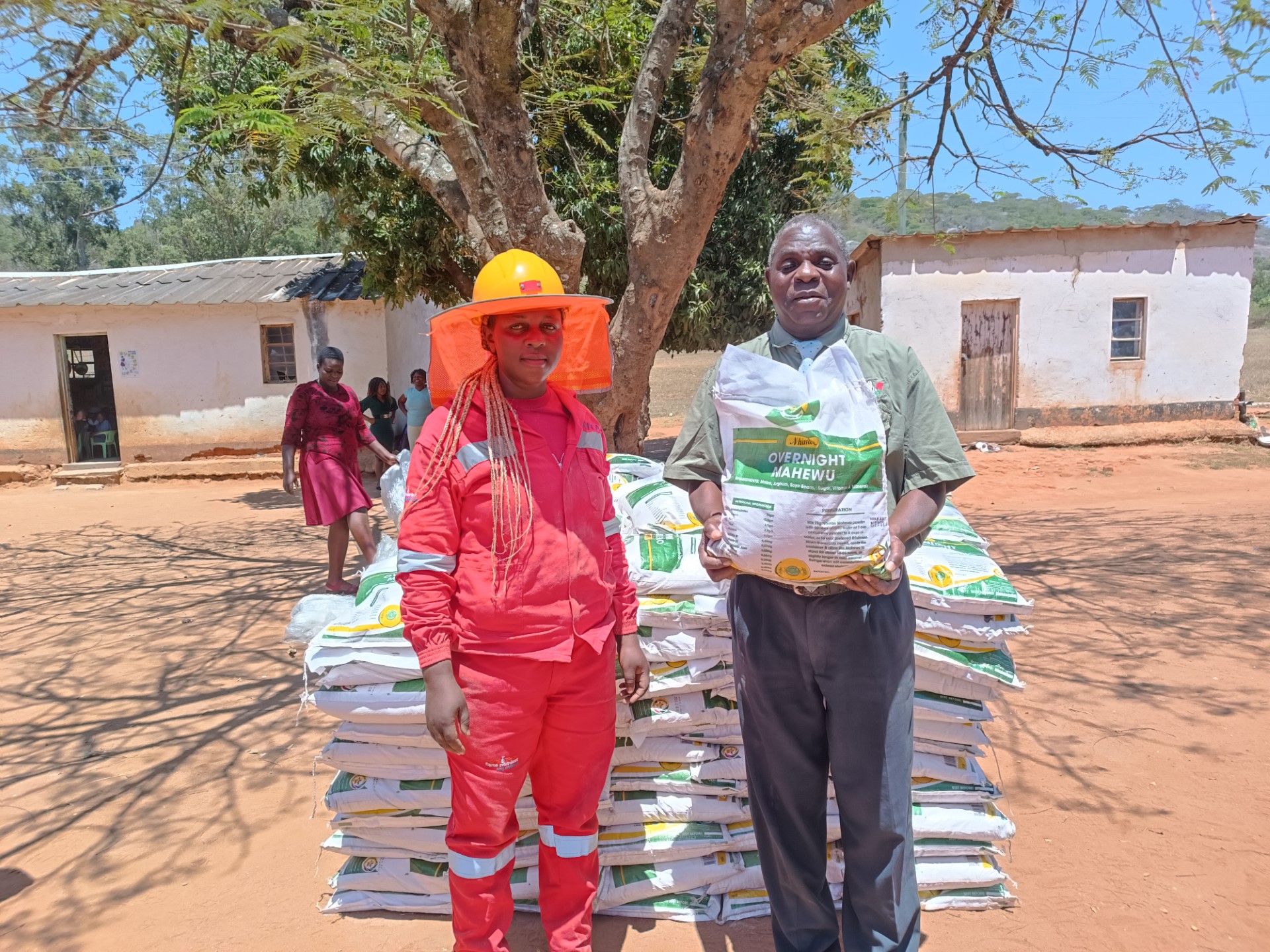
Bikita Minerals has made a lasting impact on the lives of thousands of schoolchildren through its long-running school feeding program, which now benefits about 8 000 pupils across nine primary schools—eight in Bikita and one in Gutu.
Launched five years ago, the program provides nutritious maheu to children every school term, ensuring that learners receive a vital energy boost to power them through their studies.
For many of these children, the meal they receive at school is not only a source of nourishment but often their only meal of the day.
Eleven-year-old Margaret Mutiga, a student at Beardmore Primary School, is one of the many beneficiaries. Beaming with quiet pride, Margaret shared her gratitude:
“I’m happy to be back at school. I learn, and I also get something to eat. That makes coming to school even better,” said Mutiga.
Her mother, Judith Mutiga, echoed her daughter’s appreciation, noting how the program has become a vital support system for families across the district.
“The feeding program helps struggling households. The maheu is nutritious and keeps the children strong. It encourages them to go to school every day,” she said.
Beardmore Primary School headmaster, Mr. Muzamani, highlighted the broader impact of the program on learners’ academic performance and health.
“School feeding programs like this one help children grow and develop in a healthy way. We’ve seen improvements in concentration and energy levels. Good nutrition leads to better learning outcomes and improved cognitive development.
“By investing in children’s education and well-being, this initiative is helping to build a brighter future for the nation,” he said.
Bikita Minerals’ efforts are especially timely in the context of global child hunger. According to the United Nations World Food Programme, 66 million primary school-age children go hungry every day, including 23 million in Africa.
In this context, Bikita Minerals’ program stands as a shining example of how local solutions can meaningfully address global challenges.
What began as a feeding program has grown into a lifeline for families, a motivator for students, and a key contributor to educational development.